
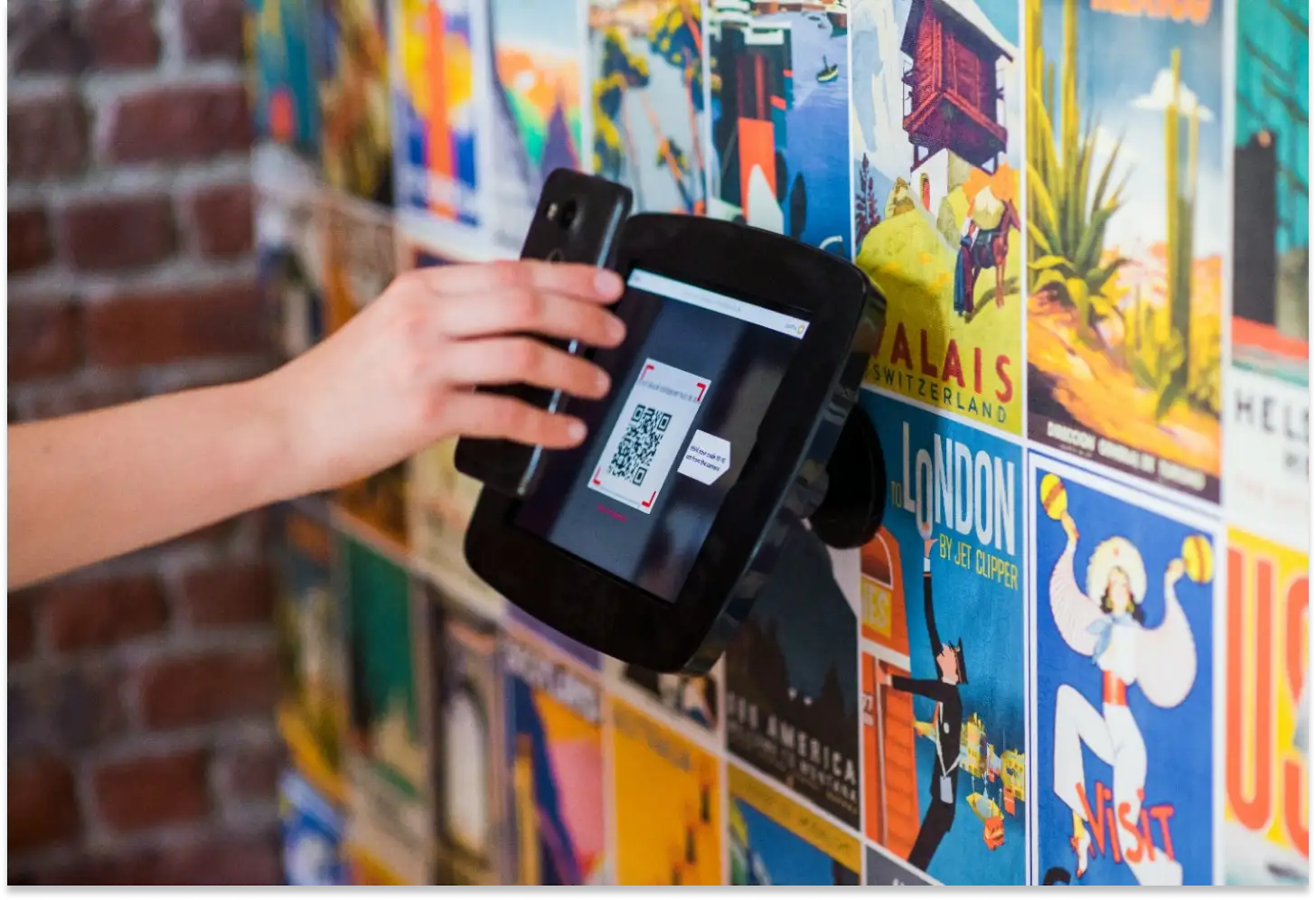
In the past decade, self-service has transformed how people interact with brands across retail, quick-service restaurants (QSR), and hospitality. What started as a convenience experiment has become an expectation. Customers now want to browse, order, and pay without friction — and digital kiosks are at the centre of this shift. These interactive terminals allow customers to take control of their journey, offering an efficient, personalised, and private experience that’s reshaping in-store service as we know it.
Why Customers Prefer Control
Customers gravitate towards self-service for three key reasons: speed, privacy, and personalisation.
Speed remains the most obvious driver. In fast-paced environments such as QSRs and transport hubs, digital kiosks help cut down waiting times by allowing multiple people to order simultaneously. Rather than queuing for a cashier, customers can complete their order in seconds, review it carefully, and make payment on the same screen.
Privacy is another growing factor. Not everyone enjoys public interactions or discussing their preferences out loud. Self-service kiosks provide a low-pressure way to make decisions without feeling rushed or judged, which enhances comfort and confidence.
Finally, personalisation is a major reason customers keep returning to kiosk-enabled venues. Unlike static menus or paper forms, kiosks can adapt to user behaviour — displaying tailored promotions, remembering previous orders, or suggesting complementary products. This element of control gives users a sense of ownership over their experience, which translates into higher satisfaction and loyalty.
Integrating Kiosks into Digital Ordering Ecosystems
The real power of kiosks lies in their connection to broader digital ordering systems. Modern kiosks are no longer stand-alone devices; they’re part of a larger digital ecosystem that includes POS (point of sale) software, CRM tools, mobile apps, and loyalty platforms.
When a customer orders via a kiosk, that information flows through the same system as online and app orders. This means preferences, purchase history, and loyalty points remain consistent across every channel. For the customer, it creates a seamless experience — they can start an order on their phone, complete it in-store at a kiosk, and still receive the same personalised offers.
For businesses, these integrated digital ordering systems provide valuable data insights. They allow brands to understand peak times, product preferences, and conversion rates, which can inform marketing, staffing, and supply decisions. In short, digital kiosks don’t just take orders — they help build smarter operations.
Real-World Impact: Faster Service, Bigger Orders, Smarter Operations
The practical results of kiosk adoption are easy to see. In venues that use self-service terminals, queues move faster, service accuracy improves, and customers report higher satisfaction. But perhaps the most striking outcome is financial.
Studies show that customers tend to spend more when ordering through kiosks. Without the social pressure of a queue behind them, people explore options longer and are more likely to add extras, upgrades, or desserts. Automated prompts — like “Add fries for £1” or “Try a larger size for 50p more” — encourage small increases in basket size that collectively have a major impact on revenue.
Kiosks also automate parts of the upselling process traditionally handled by staff. By integrating with digital ordering systems, they can deliver the right offer to the right person at the right time, with consistent messaging across every screen and device.
Operationally, kiosks allow businesses to reallocate staff from transactional roles to service-oriented ones — greeting customers, maintaining cleanliness, or assisting with complex orders. The result is a more efficient, customer-focused environment that balances human touch with technological convenience.
Future Tech: AI, Voice, and Biometrics
The next evolution of self-service kiosks will go beyond touchscreens. Artificial intelligence, voice interaction, and biometric recognition are already emerging as new layers of convenience.
AI-powered kiosks can learn from previous behaviour, recommend products based on purchase history, and adjust displays dynamically depending on customer demographics or time of day. Voice ordering removes the need for touch entirely — ideal for accessibility, speed, or hygiene. Meanwhile, biometric payment options, such as fingerprint or facial recognition, could make checkout nearly instantaneous while maintaining security.
These technologies will further tighten the integration between kiosks and digital ordering systems, turning them into intelligent service hubs capable of bridging the physical and digital shopping experience. For businesses, this means more actionable data; for customers, it means a smoother, more human-like interaction with machines.
From Optional to Essential
Digital kiosks are no longer experimental or niche. They’ve become core infrastructure for modern retail and hospitality. Customers expect fast, intuitive, and personalised experiences, while businesses need efficient, data-driven tools to deliver them.
The convergence of kiosks, AI, and digital ordering systems marks a new era of customer engagement — one where technology doesn’t just serve, but enhances the human experience. Brands that embrace this shift now will be the ones setting the standard for convenience and satisfaction in years to come.
If you manage a retail, restaurant, or hospitality brand, now is the time to review your in-store ordering experience. Evaluate whether your kiosks and digital ordering systems deliver true convenience and consistency. In an age where customer control defines loyalty, the future of service isn’t behind the counter — it’s right at your customers’ fingertips.