
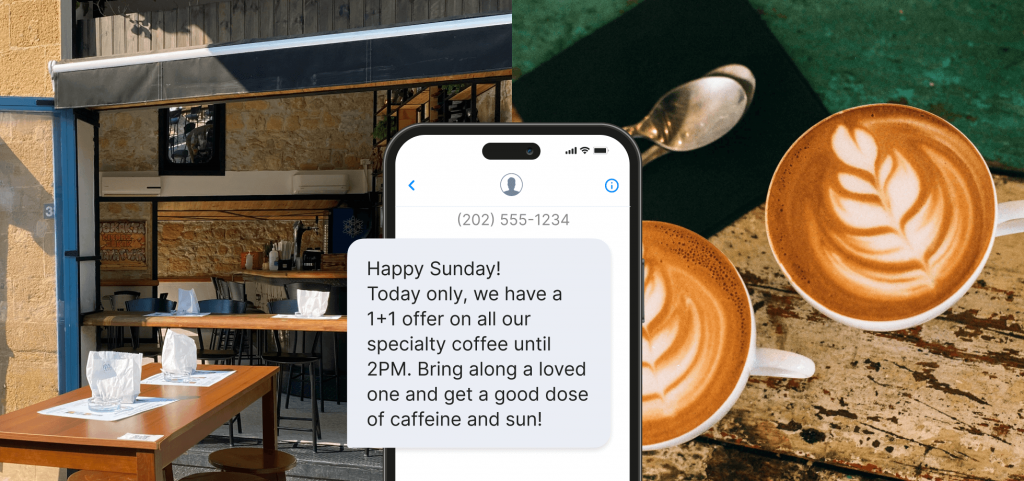
The Power of the Ping
Text messages work. While other businesses spend big money on fancy ads and complicated marketing tools, a simple text gets better results. No graphics needed. No special tricks. Just a short message that people actually read.
Why Text Message Marketing Delivers Results
The statistics speak for themselves. Text message marketing boasts an impressive 98% open rate, with most messages read within three minutes of delivery. Compare that to email marketing’s average open rate of just 20%, and it’s clear why businesses are taking SMS seriously. This direct communication channel gives brands instant access to their customers’ most personal device, the smartphone that’s never more than arm’s length away.
What makes SMS particularly powerful is its immediacy. When a customer receives a text about a flash sale, limited-time offer, or important update, they see it almost instantly. There’s no algorithm deciding whether your message deserves space in someone’s feed, no spam folder to navigate, and no competing visual elements demanding attention. It’s just your message, delivered directly to someone who has explicitly agreed to hear from you.
The Psychology Behind SMS Success
Human attention spans have shortened dramatically in the digital age. We’re overwhelmed by information, suffering from decision fatigue, and increasingly skeptical of elaborate marketing campaigns. This is precisely why simplicity works. A concise, well-crafted text message respects the recipient’s time and intelligence.
Text messages feel personal and urgent. They trigger the same psychological response as hearing from a friend or family member. This intimacy creates a unique opportunity for brands to build genuine connections without the polish and production that characterizes other marketing channels. When done right, SMS feels like a conversation rather than a sales pitch.Businesses can use an AI logo generator to build a professional visual identity that complements text message marketing efforts.
Best Practices for Effective Campaigns
Success with SMS marketing requires discipline and respect for your audience. Keep messages under 160 characters to ensure they’re delivered as a single text and remain easy to scan. Every word must earn its place.
Include clear calls-to-action that tell recipients exactly what you want them to do. Whether it’s “Reply YES to confirm,” “Click here to shop,” or “Show this text for 20% off,” eliminate any ambiguity about next steps.
Timing matters enormously. Avoid early morning or late evening sends that might irritate recipients. Consider your audience’s lifestyle and schedule your messages for maximum impact without disruption.
Personalization transforms generic blasts into relevant communications. Use customer names, reference past purchases, or segment your list based on preferences and behavior. Even simple personalization dramatically improves response rates.
Finally, always provide an easy opt-out option. It’s not just good practice, it’s legally required. A simple “Reply STOP to unsubscribe” protects both you and your customers.
Real-World Success Stories
Retail businesses have seen remarkable results with SMS campaigns. One clothing boutique increased weekend foot traffic by 35% by sending Friday afternoon texts about weekend-only discounts. A restaurant chain boosted weekday lunch sales by texting nearby customers with special offers during slow periods.
Service-based businesses benefit too. Dentists reduce no-shows with appointment reminders, while salons fill last-minute cancellations by texting their waiting list. Even B2B companies use SMS to confirm meeting times and share time-sensitive updates with clients who are constantly on the move.
Common Mistakes to Avoid
The biggest mistake is over-messaging. Send too many texts and you’ll train customers to ignore you or worse, opt out entirely. Most experts recommend no more than four promotional messages per month.
Generic messages waste the channel’s potential. If your text could apply to anyone, you’re not leveraging the data you have about your customers. Segmentation and personalization should be standard practice, not occasional enhancements.
Ignoring compliance regulations can result in serious penalties. Familiarize yourself with TCPA requirements, obtain proper consent before sending messages, and maintain meticulous opt-in records.
Finally, don’t try to cram too much information into a single message. If your offer needs extensive explanation, use SMS to generate interest and direct people to a landing page where they can learn more.
Integrating SMS with Your Overall Marketing Strategy
Text messaging shouldn’t exist in isolation. It’s most effective when coordinated with your other marketing channels. Use SMS to reinforce email campaigns, promote social media contests, or drive traffic to new content.
Consider the customer journey. SMS works beautifully for time-sensitive communications, appointment reminders, shipping notifications, and exclusive offers. Email handles longer-form content, detailed newsletters, and complex product announcements. Social media builds community and brand awareness. Each channel has unique strengths.
Embracing Simplicity in a Complex World
In an era of sophisticated marketing technology and elaborate customer experiences, it’s ironic that one of the most effective tools is also one of the simplest. Text message marketing works because it’s direct, immediate, and respectful of people’s time. It doesn’t rely on flashy design or clever copywriting gimmicks. Instead, it succeeds through clarity, relevance, and timing.
As marketers continue exploring AI, virtual reality, and other emerging technologies, the humble text message serves as a reminder that sometimes the simplest solution is the best one. When you have something valuable to say and an audience that wants to hear it, simplicity still works remarkably well.