
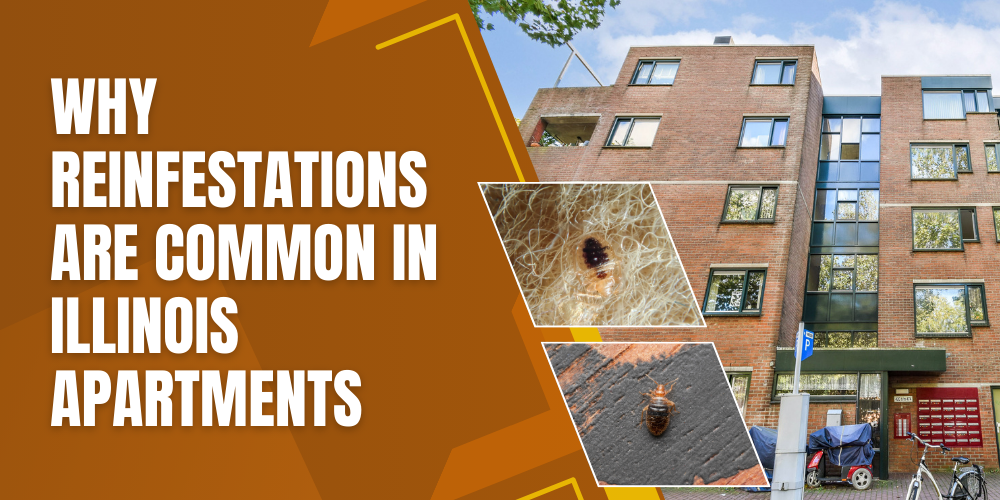
Apartment living offers convenience and affordability—but it also creates unique challenges when it comes to pest control. In Illinois, especially in dense urban areas, bed bug reinfestation is a recurring issue in multi-unit buildings. Even when one apartment receives treatment, the problem can return if surrounding units remain untreated. Understanding why bed bugs in apartments spread so easily is the first step toward stopping the cycle.
Below is why reinfestations happen so often in Illinois apartment complexes—and what tenants and property managers can do to prevent them.
Why Apartments Are a Higher Risk for Bed Bug Reinfestation
Unlike single-family homes, apartments share structural elements that make containment more difficult.
Shared Walls and Connected Units Create Hidden Pathways
One of the biggest contributors to bed bug reinfestation is structural connectivity. In multi-unit housing, apartments share:
- Interior walls
- Plumbing lines
- Electrical conduits
- Ceiling and floor gaps
These small openings allow bed bugs to travel between units undetected. A neighboring infestation can quickly become your problem—even if your apartment was previously treated.
In older Illinois buildings, cracks and aging construction materials make shared wall infestations even more common. Bed bugs can move through tiny openings in drywall or along baseboards, making containment challenging without coordinated treatment.
Residents Unknowingly Spreading Them
Movement between apartments also increases risk. Residents may unknowingly carry bed bugs on:
- Luggage
- Clothing
- Furniture
- Laundry baskets
In Illinois apartment complexes with shared laundry rooms or frequent tenant turnover, exposure risk rises significantly. Bed bugs in apartments spread quickly when multiple residents share common spaces.
Because infestations often start small, tenants may not realize there is a problem until activity spreads to neighboring units.
Common Causes of Bed Bug Reinfestation in Apartments
Reinfestation rarely happens randomly. It typically results from incomplete treatment or lack of building-wide coordination.
DIY Treatments That Leave Behind Eggs
Many tenants attempt over-the-counter sprays or foggers before reporting the issue. While these products may kill visible bugs, they rarely eliminate eggs hidden in cracks and seams.
When eggs hatch days or weeks later, the infestation appears to “come back.” In reality, it was never fully eliminated.
DIY attempts can also push bed bugs deeper into wall cavities, increasing the likelihood of shared wall infestations. Without professional treatment, these hidden populations continue to spread.
Nearby Untreated Units
Even when one apartment receives professional service, nearby untreated units can reintroduce the problem. Bed bugs easily migrate between:
- Adjacent apartments
- Units above or below
- Hallway-connected spaces
If property managers do not inspect surrounding apartments, the cycle continues. Bed bug reinfestation often stems from partial building treatment rather than isolated failure.
How to Break the Cycle of Bed Bug Reinfestation for Good
Eliminating the problem permanently requires coordination and thorough planning.
Property-Wide Heat Treatments
Heat treatment is one of the most effective solutions for multi-unit buildings because it penetrates walls, furniture, and structural gaps.
When property managers coordinate property-wide or multi-unit heat services, they:
- Eliminate bugs at all life stages
- Reduce reliance on repeated chemical applications
- Address hidden shared wall infestations
- Minimize disruption for residents
Without coordinated action, individual treatments may only provide temporary relief.
Inspection Protocols for Building Managers
Building management plays a critical role in prevention. Strong inspection protocols should include:
- Inspecting adjacent units when one case is reported
- Scheduling follow-up inspections
- Educating residents about early warning signs
- Responding quickly to tenant complaints
Prompt response prevents a small case from becoming a widespread outbreak. In Illinois apartment communities, proactive management significantly reduces long-term costs.
Prevention Tips for Apartment Renters Facing Bed Bugs in Apartments
Tenants also have a role in preventing reinfestation.
Mattress Covers and Inspection Habits
Protective mattress encasements reduce hiding spots and make detection easier. In addition, renters should:
- Inspect seams and edges monthly
- Vacuum baseboards regularly
- Reduce clutter near sleeping areas
- Report suspicious signs immediately
Consistent habits limit opportunities for bed bugs to multiply unnoticed.
What to Do When Moving Into a New Unit
Moving into a new apartment in Illinois requires caution. Before bringing belongings inside:
- Inspect mattress seams and headboards
- Check baseboards and outlet covers
- Look for dark spotting or shed skins
- Ask management about past infestations
Taking these steps early can prevent future bed bug reinfestation issues.
Act Early to Prevent Shared Wall Infestations
Bed bugs in apartments spread differently than in standalone homes. Shared walls, frequent tenant movement, and incomplete treatment plans create ideal conditions for recurrence. In Illinois, where multi-unit housing is common, coordinated response is critical.
If you suspect activity returning, do not delay. Early action limits spread and reduces overall treatment complexity. For professional guidance and inspection support, address concerns about bed bug reinfestation before the issue expands to neighboring units.
Stopping the cycle requires cooperation, fast response, and building-wide awareness—but with the right approach, long-term control is achievable.