
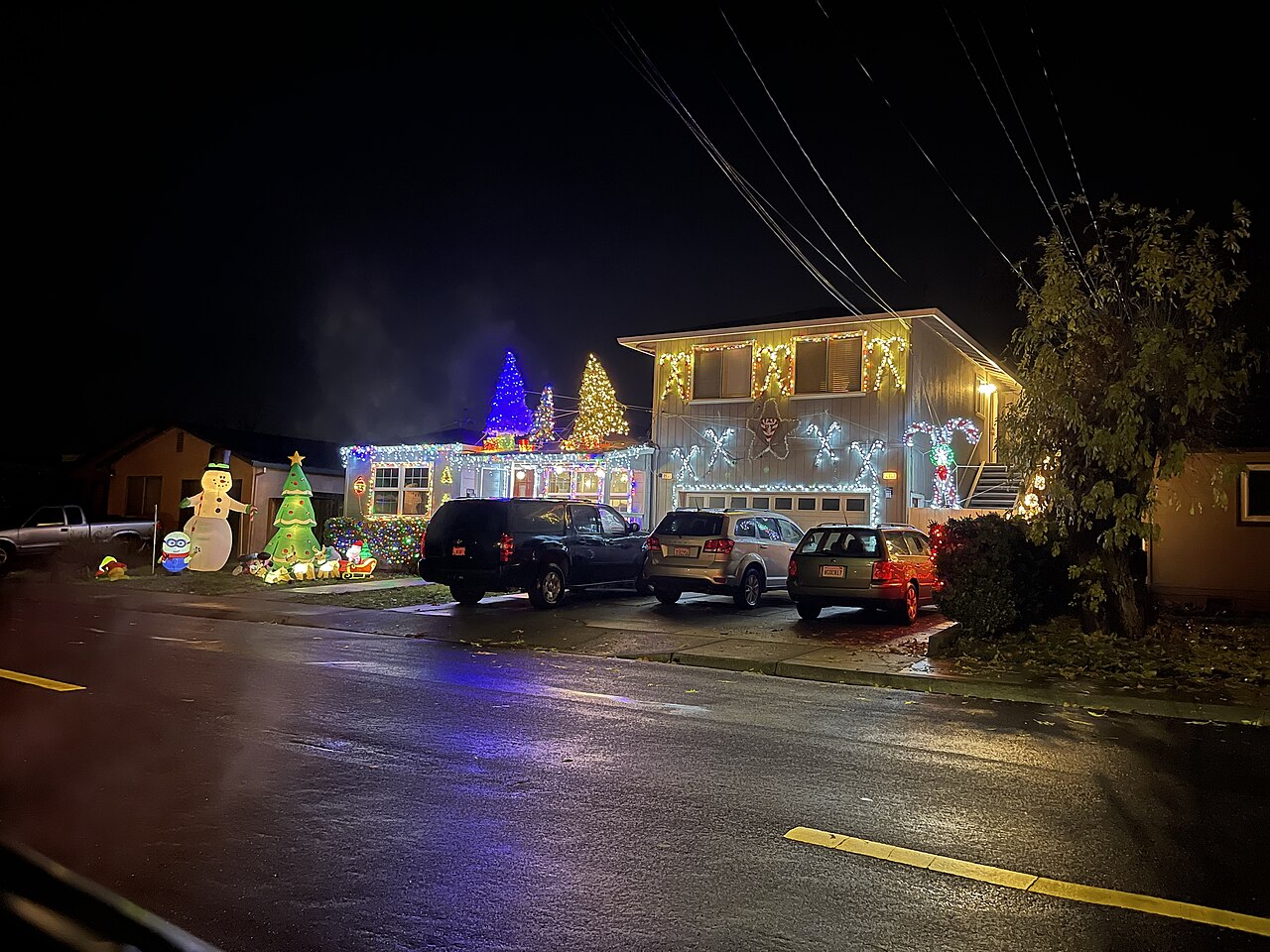
Most porch lighting fails at exactly one thing: it lights the door and forgets the person. You get a bright glaring blob above your head, a dark step you can’t see, and a yard that disappears into a void the second the sun drops. Fixing it isn’t expensive. It just takes five minutes of planning before you buy a single fixture.
Here’s the whole idea in one line: light in layers, from the ground up, and keep every bulb on the warm side of the color scale. That’s it. Everything below is how you actually do it without guessing. If you’d rather skip the hunt and shop a curated set of pieces built for porches and patios, the outdoor house lights in The Outdoor Living Collection are a solid starting point, especially the wall sconce and lantern styles that read well on brick and siding. I’d start there, then add the layers most people forget.
I’ve rehung the same sconce four times at my own place trying to get the throw right. The lesson I keep relearning: the fixture is the easy part. Placement and layering are what make a porch feel inviting instead of interrogated.
Start with the three layers, not the fixture
Think of outdoor lighting as three jobs that need three different tools. Skip any one and the whole thing looks unfinished, no matter how nice the fixture is.
- Ambient layer: the warm pool of light that says the porch is occupied. Usually a wall sconce or lantern beside the door.
- Task layer: the light you actually need to find your keys, read a house number, or see a step. This is the layer most porches miss entirely.
- Accent layer: the low glow that pulls the eye across the yard, into the garden, or up a tree. Purely for feeling, and it does more for curb appeal than most people expect.
You don’t need six fixtures. One ambient, one task, and a couple of accent pieces will outperform a single high-wattage light every time, because your eye doesn’t want brightness, it wants contrast.
What wattage will your porch actually need?
This is where people overbuy. A porch that looks like a parking lot isn’t safer, it’s just harder to see past. LEDs changed the math: lumen output, not watts, is the number that matters now, and the U.S. Department of Energy has documented how far LED efficiency has come since the early incandescent era. Roughly, a 60-watt-equivalent LED sconce is plenty for a standard entry. Save the higher output for the driveway side, where the light has further to travel.
My rule: if you can see a hard shadow line on the porch floor from a single fixture, it’s too strong. Go one step down and you’ll get a softer spread.
Color temperature makes or breaks the mood
A 4000K light on a porch looks like a convenience store. You want 2700K to 3000K, which is the warm, slightly amber range that reads as welcoming. As a general reference point, the Environmental Protection Agency has long flagged how outdoor lighting choices affect the surrounding environment, including the amount of stray light that escapes your property. That’s a good nudge to use warm, targeted fixtures angled down and in, rather than floodlights aimed outward.
Caveat worth naming: if your porch has a dark-colored ceiling or heavy brick, warm 2700K can read almost orange at night. In that case 3000K is the safer pick. I’d still take it over anything cooler.
The placement rules most people get wrong
Spacing matters more than the fixture itself. Here’s the short version:
- Mount sconces at eye level or slightly above, roughly shoulder-to-head height, so the light falls on the visitor’s face rather than over it.
- Keep fixtures a few inches off the door reveal so they don’t throw a hard shadow on the frame.
- Add a step light or two if your porch has a rise. This is the single most underrated piece of safety lighting on any home.
- Go lower, not brighter, for accents with path or post fixtures, so the glow starts at ground level and travels up.
Ignore placement and even the wrong fixture can look okay. Get placement right and a modest fixture looks expensive. That’s the entire magic trick.
Pick a style that works on your actual house
Outdoor fixtures live outside, in weather, forever. That means material choice matters as much as shape. Copper and bronze age gracefully; powder-coated steel holds up but chips. Scroll through your neighborhood at dusk and you’ll notice which ones patina and which ones pit.
Style-wise, sconces and lanterns outnumber everything else for a reason. A single lantern beside the door is classic and forgiving. A pair of sculptural sconces reads more modern. Both work. I’d rather see you buy one good fixture than four cheap ones, because hardware is often visible up close and cheap brass finish gives itself away.
A quick walk-through to test before you commit
Once your fixtures are in, do this one evening. It’s the part of the process that separates a good porch from a great one.
- Stand at the street and look toward the house. Can you name the entry?
- Walk to the door at night, eyes down. Does any step or edge disappear?
- Sit on the porch. Is any light shining directly into your eyes from a fixture?
- Look at the yard. Can you see the edges, or is it a black wall?
If you fail any check, don’t buy a new fixture yet. Reposition, aim down, drop the wattage, or add one accent piece. Most fixes cost nothing but a ladder and ten minutes.
What I’d do if I were starting from scratch
One lantern beside the door, two step lights down the riser, and a pair of low path lights in the planting bed. That’s it. Warmer bulbs than you think, one step less wattage than you think, and every fixture aimed down. The National Park Service has spent decades thinking about how lighting affects how people experience a place at night, and its core lesson holds for a farmhouse porch: light what matters and let the dark do its work. Dark isn’t a problem to be solved. It’s the backdrop that makes your porch glow read as warm at all.
For more on a related topic, read Why Outdoor Living Can Be One of the Smarter Home Investments.
So here’s the question worth sitting with as you plan: what do you want your porch to look like from the street, and what’s the one layer you’re currently missing? Answer that and the fixture list writes itself.