
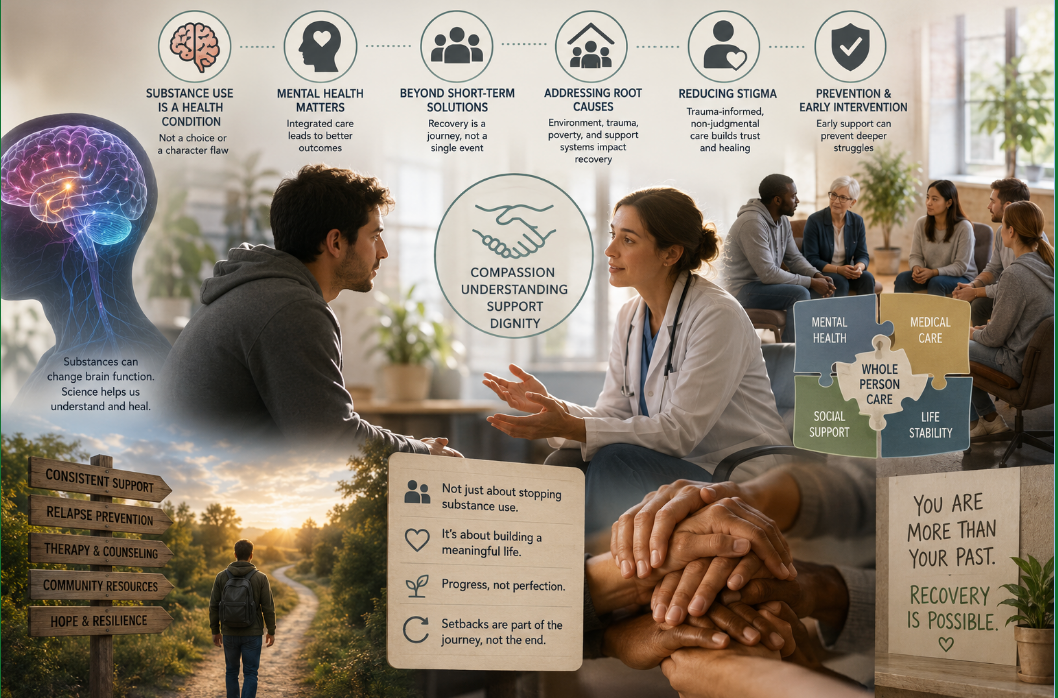
Over the past few decades, the way healthcare systems, professionals, and society at large understand substance use has shifted in meaningful ways. What was once largely framed through a lens of moral judgment or personal failure is now increasingly recognized as a complex health condition influenced by biology, environment, psychology, and social factors. This evolving perspective is reshaping how care is delivered and how individuals experiencing substance-related challenges are supported.
At the center of this shift is a growing recognition that substance use and alcohol dependence are not simply matters of willpower. Instead, they are now widely understood as chronic, relapsing health conditions that require long-term, compassionate, and evidence-based approaches. This change in thinking is gradually reducing stigma and opening the door to more humane and effective responses.
From stigma to understanding
Historically, people struggling with substance use were often labeled in ways that reinforced shame and isolation. Terms that implied moral weakness or lack of discipline were common, and these attitudes influenced both public perception and healthcare responses. As a result, many individuals avoided seeking help, fearing judgment or discrimination.
Modern healthcare, however, has begun to challenge these outdated views. Advances in neuroscience have shown that substances can significantly alter brain chemistry, particularly in areas responsible for decision-making, reward, and impulse control. These findings support the understanding that conditions such as Drug and Alcohol Addiction involve changes in brain function that are not easily reversed by simple intention or short-term behavioral adjustments.
As this scientific understanding spreads, it has helped shift the conversation from blame toward support and treatment. This shift is not just theoretical—it is changing how care systems are structured and how professionals engage with individuals in need.
Substance use as a health condition, not a character flaw
One of the most important developments in modern healthcare is the classification of substance use disorders as medical conditions. This approach aligns them with other chronic illnesses such as diabetes or hypertension, which also require ongoing management rather than one-time interventions.
Viewing substance use through this lens encourages a more comprehensive approach to care. Instead of focusing solely on stopping substance use, healthcare providers are increasingly considering the broader context of a person’s life. This includes mental health, trauma history, housing stability, employment, and social support systems.
Alcohol dependence, in particular, is now better understood as a condition that often develops gradually and can be influenced by genetic predisposition, stress, cultural norms, and coping mechanisms. Recognizing these contributing factors helps reduce the oversimplification of the issue and promotes more individualized care strategies.
The role of mental health in substance use
Another major shift in perspective involves the relationship between mental health and substance use. It is now widely accepted that these two areas are deeply interconnected. Many individuals experiencing substance-related challenges also face anxiety, depression, post-traumatic stress, or other psychological conditions.
Rather than treating these issues separately, modern healthcare increasingly emphasizes integrated care models. This means addressing both mental health and substance use simultaneously, rather than in isolation. This approach has shown better outcomes, as untreated mental health conditions can often contribute to continued or recurring substance use.
This connection also highlights the importance of emotional regulation and coping skills. Many individuals turn to substances as a way to manage distressing emotions or difficult life circumstances. Understanding this pattern allows for more compassionate interventions that focus on building healthier coping mechanisms rather than simply discouraging use.
Moving beyond short-term solutions
In earlier approaches, substance use treatment was often focused on short-term detoxification or immediate cessation. While these steps can be important, they are now understood to be only part of a longer journey. Recovery is increasingly viewed as an ongoing process that may include periods of progress, setbacks, and adjustment.
Modern perspectives on Drug and Alcohol Addiction emphasize continuity of care. This includes ongoing support, relapse prevention strategies, and long-term engagement with recovery resources. Instead of expecting immediate and permanent change, healthcare systems are beginning to recognize recovery as a gradual and non-linear process.
This shift is particularly important because relapse is no longer seen solely as a failure. Instead, it is often viewed as a signal that adjustments in care or additional support may be needed. This reframing reduces shame and encourages individuals to remain engaged in their recovery journey.
The importance of social and environmental factors
Another significant evolution in understanding substance use is the recognition of social determinants of health. Factors such as poverty, unstable housing, unemployment, exposure to trauma, and lack of access to healthcare can all influence the likelihood of developing substance-related challenges.
In this context, substance use is not only an individual issue but also a community and societal one. Effective responses therefore require more than clinical treatment alone. They also involve strengthening social support systems, improving access to education and employment opportunities, and addressing systemic inequalities.
This broader perspective helps explain why two individuals with similar substance use patterns may experience very different outcomes. It also reinforces the idea that sustainable recovery often requires changes not just within the individual, but within their environment as well.
Reducing stigma in healthcare settings
Despite progress, stigma around substance use still exists in some healthcare environments. This can create barriers to care, discourage honest communication, and delay treatment. Recognizing this, many healthcare systems are actively working to train professionals in trauma-informed and non-judgmental approaches.
Trauma-informed care, in particular, has become a key framework in modern treatment settings. It emphasizes safety, trust, collaboration, and empowerment. This approach acknowledges that many individuals with substance use histories have experienced trauma, and that care should be delivered in a way that avoids re-traumatization.
By reducing stigma and increasing empathy, healthcare providers can build stronger relationships with individuals seeking support. This, in turn, improves engagement and long-term outcomes.
The role of prevention and early intervention
Changing perspectives are also influencing how prevention is approached. Rather than waiting for severe substance-related issues to develop, there is now greater emphasis on early identification and intervention.
This includes screening in primary care settings, school-based education, and community outreach programs. The goal is to identify risk factors early and provide support before patterns of harmful use become deeply entrenched.
Early intervention is especially important in addressing alcohol dependence, which can develop gradually and go unnoticed for extended periods. By recognizing early warning signs, healthcare systems can offer timely support that may prevent more severe outcomes later.
A more human-centered future for care
Ultimately, the evolving understanding of substance use reflects a broader shift toward more human-centered healthcare. Instead of focusing solely on symptoms or behaviors, modern approaches aim to understand the whole person—their history, environment, challenges, and strengths.
This perspective acknowledges that recovery is not a uniform process. Different individuals require different types of support at different times. Flexibility, patience, and compassion are becoming central principles in how care is delivered.
As society continues to rethink its approach to Drug and Alcohol Addiction, the emphasis is increasingly placed on dignity, respect, and long-term support. This represents a meaningful departure from past approaches and offers hope for more effective and compassionate care systems in the future.
Conclusion
The changing perspectives on substance use and alcohol dependence reflect significant progress in both science and society. By moving away from judgment and toward understanding, modern healthcare is creating space for more effective and humane responses.
While challenges remain, the direction is clear: substance use is being recognized as a complex health issue that requires comprehensive, sustained, and compassionate care. As this understanding continues to grow, it has the potential to transform not only healthcare systems, but also the lives of individuals and communities affected by it.