
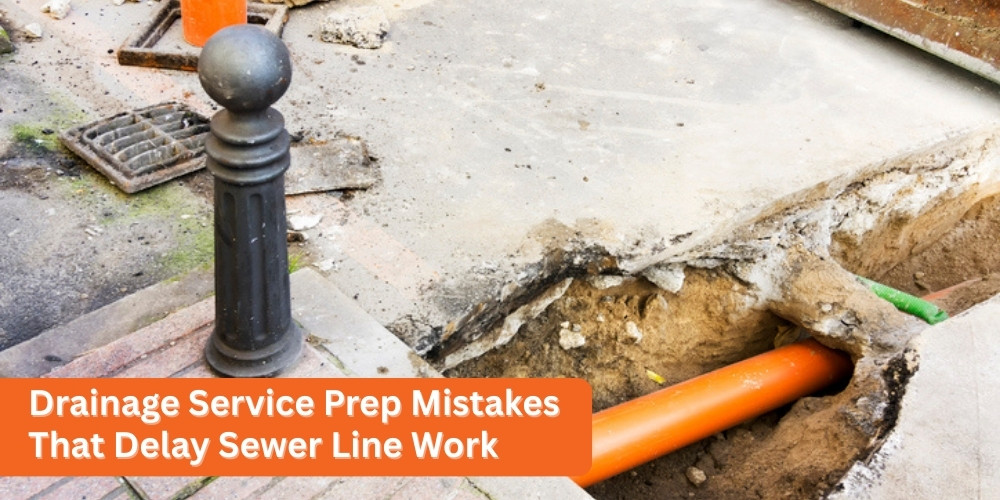
Ever booked a plumber and watched the clock tick? That usually happens when a drainage service appointment runs into blocked access, missing details, or an unclear shutoff plan. As a result, professionals spend time confirming the basics rather than addressing the problem.
These setbacks can also delay sewer line services because they require safe entry points and enough space to work.
The sections below outline common prep mistakes and how to avoid them.
1. Missing Access and Entry Clearance
Limited access often slows a drainage service visit because professionals cannot reach key system points right away. Common access blockers include:
- Locked gates: They cannot reach outdoor cleanouts, yard lines, or access points without entry.
- Blocked cleanouts: Stored items, debris, or covers buried under landscaping prevent quick inspection and clearing.
- Cluttered basements: Narrow pathways limit safe movement and restrict access to drains and main lines.
- Items stored around entry points: Boxes, furniture, or equipment near utility walls reduce workspace and block tool use.
Moreover, it also increases labor time and can postpone sewer line services for the following reasons:
- Diagnostics slow down: They struggle to run cameras or confirm flow paths.
- Repairs take longer: Limited space delays setup and tool placement.
- Replacements may pause: They need room to stage materials and equipment before proceeding.
2. Skipping Line Mapping and Utility Checks
Skipping line mapping and utility checks often leads to delays and avoidable damage. Before professionals begin, they need basic property details so they can work from facts instead of guesswork, including the following:
- Known cleanout locations: These provide direct access for inspections and testing.
- Prior repair notes: Past fixes reveal weak points and pipe materials.
- Past drainage service reports: Previous camera findings and service notes point to trouble spots and help professionals plan the work.
Professionals also request the following before excavation-related sewer line services to prevent stop-work orders:
- Utility marking before digging: Marked lines avoid damage to gas, electric, or water systems.
- Confirmed sewer routes: Accurate mapping limits unnecessary digging.
- Fewer work stoppages: Verified routes reduce on-site changes.
- Lower rework risk: Clear layouts prevent delays tied to unexpected conflicts.
3. Ignoring Water Use and Fixture Prep
Active water use during a drainage service visit can interfere with testing and slow progress. As a result, flow conditions change, potentially requiring repeat checks. These actions often interfere with testing and extend the service window:
- Running faucets: Continuous flow can shift debris and alter how the line drains, which makes results harder to confirm.
- Flushing toilets: A flush can change flow conditions and interrupt camera checks or timing.
- Using appliances: Dishwashers and washing machines send large bursts of water that can trigger backups in weak sections.
- Switching drains on and off: Intermittent use can create inconsistent readings and delay next steps.
Simple prep steps support smoother sewer line services and keep the process moving, such as:
- Pause water use during testing: Avoid showers, laundry, dishwashing, and toilet flushing until professionals finish the test.
- Clear sink areas: Remove stored items for easier access.
- Identify affected fixtures: Share which drains back up or drain slowly, and when it occurs.
4. Delaying Approval and Job Logistics
Delays after inspections can stall the entire repair process. When approvals or logistics take too long, professionals cannot lock in schedules, which pushes sewer line services further out. Slow decision-making often stalls progress in the following ways:
- Slow estimate decisions: Open time slots fill quickly.
- Pending permits: Required approvals pause progress.
- Unclear repair choices: Professionals cannot finalize materials or timing.
- Missed scheduling windows: Follow-up work postpones rechecks, tests, or related repairs.
Faster approvals and job readiness also keep drainage service and follow-up work on track. To help start without delays, homeowners can prepare the site in the following ways:
- Reserve parking space: Allows them to unload and begin promptly.
- Provide full access: Unlock gates and clear pathways.
- Secure pets: Keep work areas safe and uninterrupted.
- Stay reachable: Respond quickly to questions during the visit.
Prep Right, Fix Faster!
Conclusively, a little prep goes a long way because access, planning, and simple household coordination keep professionals working instead of waiting. As a result, you reduce repeat visits, protect your space, and keep sewer line services moving from diagnosis to repair without delays. Also, when you clear the work area and share key details upfront, the team can bring the right tools and finish faster.
Before your next appointment, schedule drainage service in Lipscomb, AL, and request a prep checklist to help the job start on time and stay on track.