
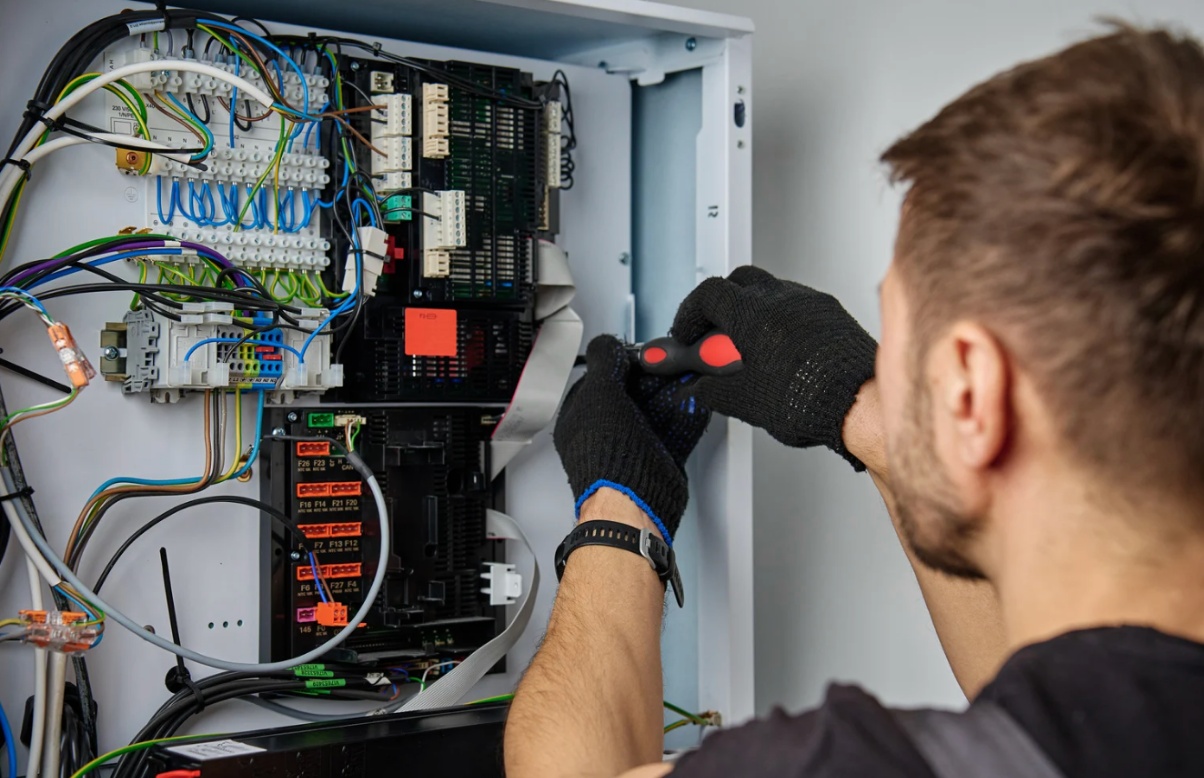
Most homes are wired for the era they were built in, not the way people live in them today. A panel installed in the 1980s was built to handle a television, a refrigerator, a window AC unit, and basic lighting. It was not designed for EV chargers, heat pumps, electric ranges, home offices, smart systems, and the heavier electrical demand of a modern household. As power needs increase, an outdated panel can become a limitation on both safety and performance, leading to overloaded circuits, repeated breaker trips, and reduced capacity for future upgrades, according to the latest Houston housing insights.
For homeowners researching Residential Electrical Panel Replacement Lakewood CO, it helps to understand that a panel upgrade is often less about fixing a problem and more about bringing a home’s electrical infrastructure in line with how it is actually used. Load calculations, service capacity, permitting, and code compliance all play a role in determining what size upgrade makes sense.
In the Lakewood area, Firefly Electrical Services is among the companies involved in residential electrical work, but understanding why panels need upgrading, what replacement involves, and how to plan is what helps homeowners make informed decisions.
Why Electrical Demand Has Changed
The average American home used about 9,000 kilowatt-hours of electricity per year in the 1980s. According to the U.S. Energy Information Administration, that figure now exceeds 10,500 kWh annually and continues to climb as households add more plug-in devices, electric appliances, and EV charging.
That increase in demand lands on a panel that was sized for a lower baseline. The result is a home where circuits are regularly maxed out, breakers trip on normal use, and adding anything new requires either sacrificing something else or splitting circuits in ways they were not designed to be split.
Specific trends driving panel upgrades:
- Electric vehicle charging. A Level 2 EV charger requires a dedicated 50-amp circuit. A 100-amp panel serving a full household typically cannot add a 50-amp circuit without sacrificing other circuits or risking continuous overloading.
- Heat pumps and mini-splits. More efficient than gas systems for heating and cooling, but they require dedicated high-amperage circuits that older panels often cannot supply cleanly.
- Electric ranges and induction cooktops. Converting from gas to electric cooking requires a 240V 50-amp dedicated circuit. Kitchens in older homes rarely have that circuit available.
- Home additions and ADUs. Adding living space adds electrical load. A panel that was barely adequate for the original home is not adequate for an expanded one.
- Solar and battery storage. Solar inverters and home battery systems require a panel that can handle bidirectional power flow and has the capacity to manage both generation and consumption.
The Difference Between 100-Amp and 200-Amp Service
Most older homes have 100-amp service. That was the standard through the 1970s and into the 1980s for smaller homes. Some homes built before the 1960s have 60-amp service, which is effectively inadequate for any modern household.
A 200-amp panel provides twice the capacity. For most single-family homes, 200-amp service is sufficient for full electrification, including EV charging, electric cooking, and HVAC. Homes with very high electrical demand, such as those with multiple EV chargers, electric heating in a large square footage, or workshop equipment, may benefit from 400-amp service.
The practical difference in your home is measured in available circuit slots and amperage headroom. A 100-amp panel that is already running 20 circuits has almost no capacity for additions. A new 200-amp panel with 30 to 40 circuit slots gives you the room to add whatever comes next without another service upgrade.
What an Upgrade Includes
A panel upgrade is not just swapping one box for another. The work typically involves:
- Load calculation. Determining the actual and projected demand of the home to size the new panel correctly
- Utility coordination. The power company must de-energize the service to your home before the panel can be safely worked on
- Service entrance evaluation. The wires running from the utility meter to the panel (service entrance conductors) may need to be upgraded to match the new panel’s amperage
- Panel installation. Removal of the old panel, installation of the new panel, transfer of all existing circuits, and labeling of the breaker directory
- Grounding and bonding verification. Modern code requires specific grounding and bonding configurations that older installations may not have
- Permit and inspection. Panel upgrades require a permit in most municipalities, including Lakewood. The inspection confirms code compliance before the work is closed out.
The Colorado average for a 200-amp panel upgrade typically falls between $1,500 and $4,000. Projects requiring service entrance upgrades, panel relocation, or extensive circuit work fall toward the higher end.
Planning for the Future in a Single Upgrade
The best time to think about future circuits is when the panel is open, and the electrician is already on-site. Adding circuits during an upgrade costs less than scheduling separate service calls later.
If you know you are going to add an EV charger in two years, have the circuit rough-in done during the panel upgrade. If a basement finish is in the plans, ask the electrician to run a subpanel feed to the basement during the same visit. If you are considering solar in the next five years, discuss the panel placement and wiring requirements now.
Planning during a single upgrade appointment almost always costs less than returning for each addition separately, because the most expensive part of any electrical project is the initial service call, permitting, and utility coordination.