
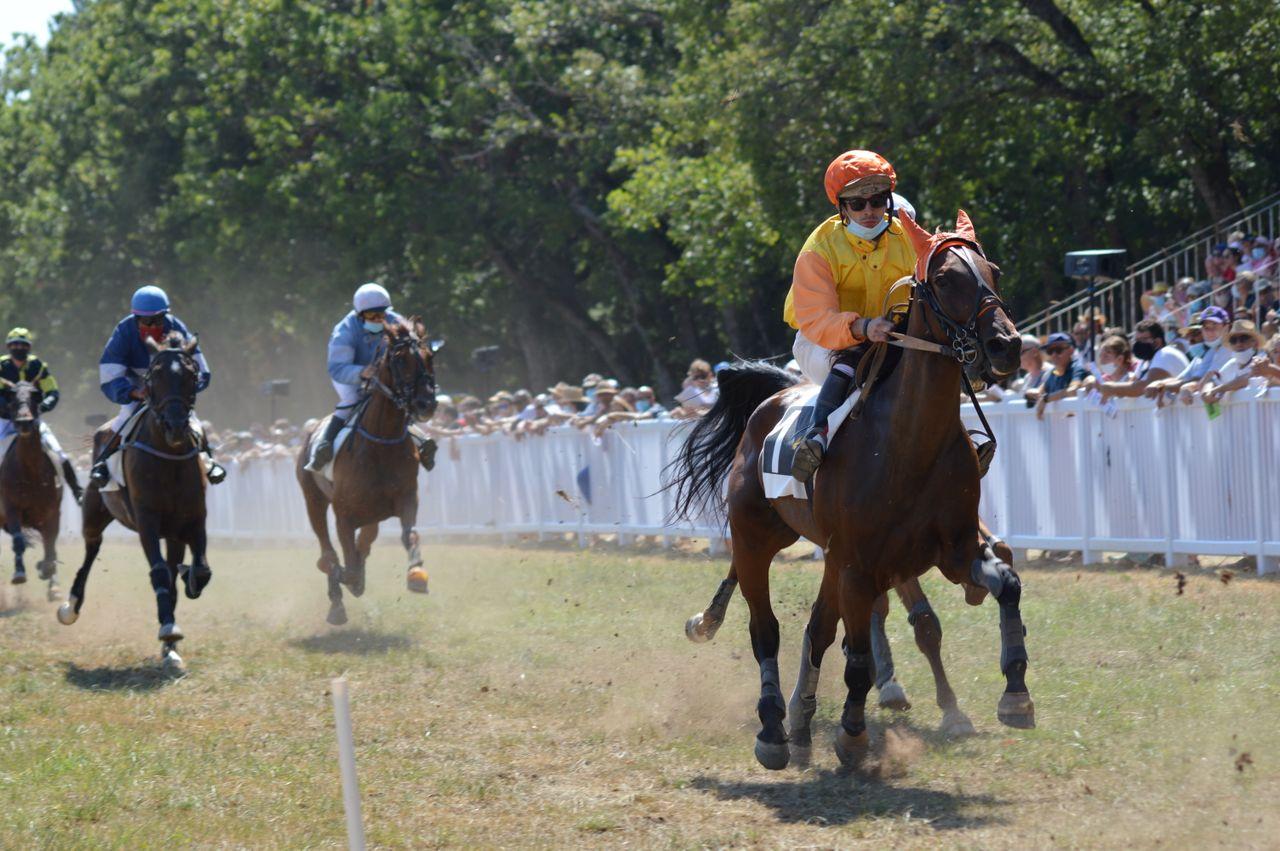
Horse racing is a global phenomenon. We can safely say that this is the most diverse sport in the world. We can find traces of horse racing in every culture on the planet, from North and South America to Europe, the Middle East, and even Asia and Australia.
Since North America is considered one of the most advanced horse racing scenes in the world, if we dig deeper into the industry, we can find a mix of nationalities, including Jewish figures who at some point dominated the sport.
The Jewish connection to the American racing history is not exactly a neat story. These figures came from different generations, different levels of society, and very different relationships with Jewish identity.
Some arrived as immigrants; others became part of America’s financial elite, but the point is that they helped shape American horse racing history quite a lot. Let’s learn more about some Jewish figures who were most dominant in American racing history.
August Belmont Is the First Name Most People Do Not Think About
If you’re a horse racing fan, you’ve definitely heard of the Belmont Stakes. August Belmont is less famous.
That is strange considering the race is literally named after him. Yes, one of the most popular races in America, included in the Triple Crown, is named after a German Jewish family.
Belmont was born in Hesse in 1813 to a prominent Jewish family and began working with the Rothschild banking house while still young. He arrived in New York in 1837, during the financial panic, and quickly established himself in American banking and society.
But the part that most people don’t know is that Belmont got completely involved in horse racing. He served as president of the National Jockey Club from 1866 to 1887 and developed Nursery Stud, first on Long Island and later through a Kentucky operation.
When the Belmont Stakes was first run at Jerome Park in 1867, the race carried his name.
Okay, he might not be exactly a Jewish racing hero because his own relationship with his upbringing was quite complicated. After marrying Caroline Slidell Perry in an Episcopal ceremony in 1849, he stopped publicly acknowledging his Jewish background, although not one account notes that he formally converted.
So, the next time you’re betting on the Belmont Stakes, remember that this was started because of a person with a German-Jewish connection. An influential person during that time, so no wonder the race carries his name.
But that shouldn’t be as important as finding a horse that has the potential to win the race. So, make sure you claim a horse racing sign up bonus when you place a bet, and do your own research in order to increase your winning chances.
John Hertz Went From Immigrant Boy to Triple Crown Breeder
The name "Hertz" probably makes you think of rental cars.
Fair enough.
John D. Hertz did build an enormous business career connected with taxis and automobiles, but his horse racing story is much better than most people realize.
Hertz was born Sándor Herz in Austria-Hungary to a Jewish family and came to Chicago as a child. His formal education ended early, and his working life took him through newspapers, boxing, and transportation businesses before he became extremely wealthy.
Then came the horses.
John and his wife Fannie became major Thoroughbred owners and breeders. Their Stoner Creek Stud near Paris, Kentucky, became the center of a serious breeding operation. Fannie Hertz officially raced many of the family's horses, including Reigh Count, winner of the 1928 Kentucky Derby and Horse of the Year.
Count Fleet Almost Left the Hertz Operation.
Count Fleet was not considered a perfect young horse.
He was narrow, lightly built, and difficult enough that John Hertz reportedly considered selling him. The colt was put through an auction process in 1941 and did not find a buyer at the required price.
Very fortunate.
For the Hertzes, at least.
Count Fleet became one of the most dominant three-year-olds in American racing history. In 1943, he won the Kentucky Derby by three lengths, the Preakness by eight, and the Belmont Stakes by 25 lengths.
Twenty-five.
Secretariat later made enormous Belmont margins look almost normal, which was extremely inconsiderate to every champion who came before him. But Count Fleet's 25-length win was extraordinary and stood as the Belmont record margin until Secretariat's 31-length performance in 1973.
Hirsch Jacobs Came From the Other End of New York
August Belmont entered racing from banking and elite society.
Hirsch Jacobs did not.
Jacobs grew up in East New York, Brooklyn. As a child, he raised and raced pigeons on the roof of the family's tenement building. He left formal schooling at 13 and later worked as a steamfitter's assistant before finding his way into horse racing.
This is probably our favorite story here because Jacobs did not arrive with an established breeding farm.
He largely taught himself.
He studied animals, learned their behavior, and developed his own understanding of conditioning and veterinary care. In 1926, he trained his first official winner. By the time his career ended, Jacobs had saddled 3,596 winners.
At the time of his death in 1970, nobody had trained more.
Ethel Jacobs Was Not Just the Trainer's Wife
Women in old racing histories have an unfortunate habit of appearing only as someone's wife.
Ethel Jacobs deserves more than that.
Horses raced in her name, and her distinctive salmon pink and green silks became part of the Jacobs operation. She was North America's leading owner in 1936, 1937, and 1943.
Her horses included Stymie, Searching, and Affectionately, all future Hall of Famers.
The family operation continued after Hirsch's death. In 1970, horses owned by Ethel and trained by their son John won two Triple Crown races. Personality won the Preakness and was later named Horse of the Year. High Echelon won the Belmont Stakes.
The history of Jewish figures in America doesn’t stop there. There are plenty of other less influential names that have had an influence on the entire horse racing industry. The surprising part isn’t that Jewish figures were present in American horse racing history. The surprising part is how often we tell the story without mentioning them.