
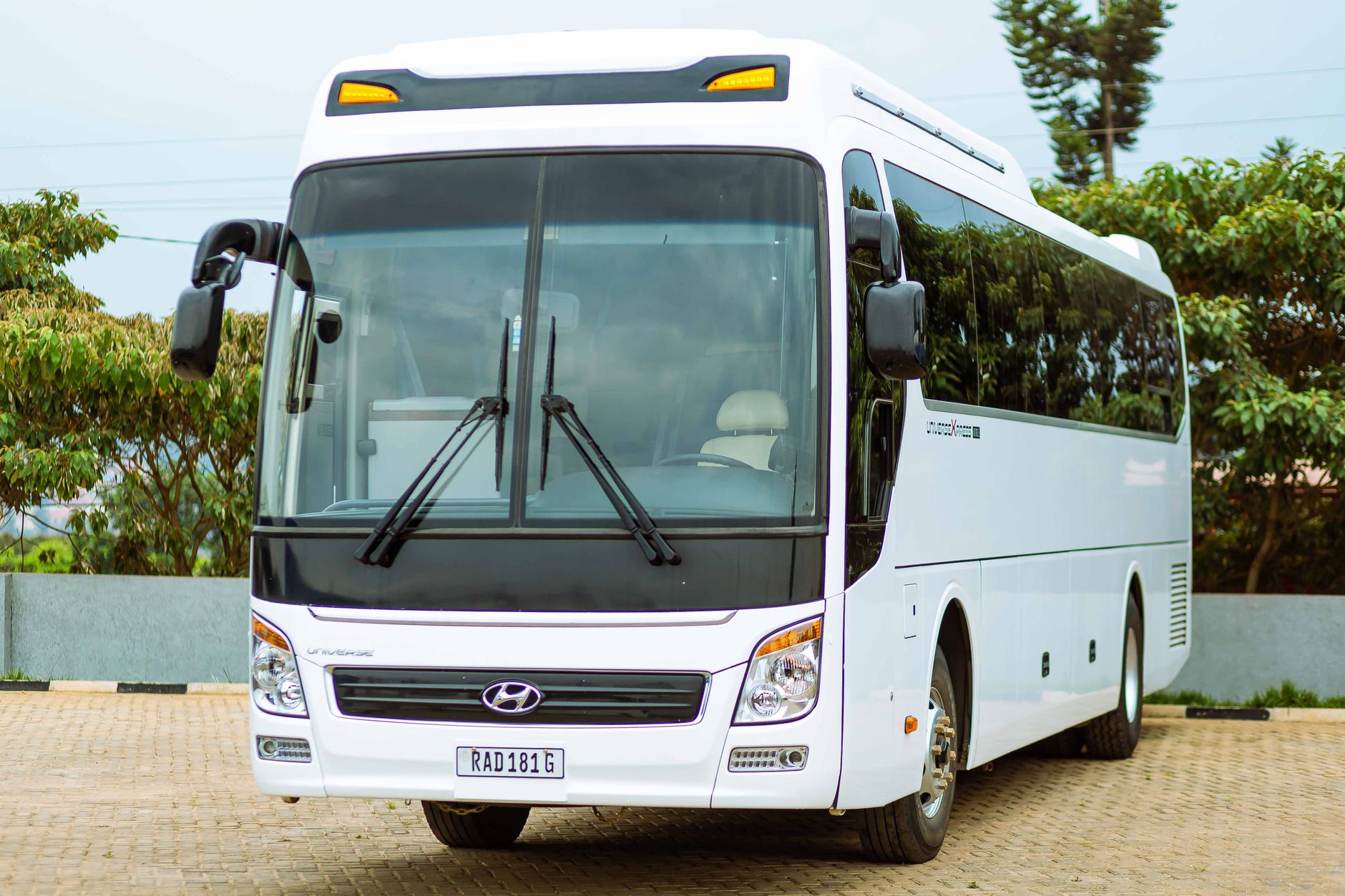
Every vehicle size involves trade-offs. A sprinter van is nimble but small. A full-size coach is roomy but big for tight streets and half-full trips. The 40-passenger bus, often called a mini coach, sits in a sweet spot for groups of roughly 30 to 40 people, but it is not automatically the right choice for every group in that range.
Rather than simply listing features, this guide weighs the strengths of a 40-passenger bus against its trade-offs, so you can decide with clear eyes whether it fits your trip.
What Exactly Is a 40-Passenger Charter Bus?
A 40-passenger charter bus is a mid-size coach built for regional travel. It typically offers reclining high-back seats with headrests, climate control, overhead storage, and on most models, Wi-Fi and charging outlets. It is shorter than a full-size motor coach, which makes it easier to maneuver through city streets, hotel driveways, and venue entrances.
Based on 2026 averages published by a national charter booking network, mini coaches in the 35 to 40 passenger range typically rent for about $190 to $230 per hour, usually with a five-hour minimum, compared with about $200 to $250 per hour for a 50 to 56 passenger coach.
Where Does a 40-Passenger Bus Excel?
Right-Sizing for Mid-Size Groups
The biggest strength is fit. For a group of 32 to 38 people, a 40-seat bus leaves a comfortable buffer without paying for 15 or 20 empty seats. Passengers can spread out slightly, and late additions still have somewhere to sit. It also keeps the whole group together in one vehicle, which a pair of smaller buses cannot.
Comfort for Regional Trips
On trips of one to three hours, reclining seats, climate control, and charging outlets make a noticeable difference. Corporate teams can work on board, students can rest, and older travelers stay comfortable. Tinted windows cut glare on sunny afternoons, and a PA system helps tour guides speak to the whole group.
Easier Access
A mid-size coach can reach places that challenge a full-size bus: downtown hotel entrances, historic districts, winery driveways, and smaller venues. That flexibility often saves time at every stop, since the bus can pull closer to the door. Some venues also restrict large coaches entirely, which can make a mid-size bus the only practical option.
A Professional Presence
For corporate events, weddings, and client outings, a clean mid-size coach makes a polished impression at a fraction of the cost of multiple luxury vehicles.
What Trade-Offs Should You Weigh?
Luggage Space
Storage is the most important trade-off. Many 40-passenger buses rely mainly on overhead bins and a modest rear or side compartment, rather than the deep underfloor bays of a full-size coach. For day trips, that is rarely a problem. For multi-day tours, airport transfers with suitcases, or teams with equipment bags, it can be. Share a luggage list with the provider before booking. A photo of the storage space, if the provider can share one, removes any guesswork.
Restrooms
Restrooms are less common on mid-size coaches than on full-size models. For trips under two or three hours, planned stops work well. For longer journeys, ask specifically whether the assigned vehicle has one. It also helps to seat anyone prone to motion sickness near the front, where the ride is steadiest.
The Price Gap Can Be Small
Because hourly rates for mid-size and full-size coaches overlap, a 40-seat bus is not always dramatically cheaper. If your group is close to 40 or likely to grow, a full-size coach may cost only slightly more while adding storage and a restroom.
For groups weighing whether a 40 passenger charter bus is the right fit, the deciding questions are usually luggage, trip length, and headcount stability. If all three point to a mid-size vehicle, it offers excellent value. If any one of them points the other way, a full-size coach may serve you better.
How Do the Strengths and Trade-Offs Compare?
| Strength | Trade-Off |
| Right size for 30 to 40 riders | Little room for growth beyond 40 |
| Comfortable for regional trips | Restroom less common than on full coaches |
| Easier access to tight venues | Less luggage space than underfloor bays |
| Lower hourly rate than a full coach | Price gap can be small near capacity |
Who Should Choose a 40-Passenger Bus?
A mid-size coach is usually a strong choice for:
- Corporate teams: 30 to 40 heading to offsites, dinners, or client visits
- School groups: On-day field trips with light bags
- Wedding guests: Moving between a hotel and a nearby venue
- Church and community groups: On regional outings
- Tour groups: Visiting several stops in a city or wine region
In each case, the common thread is a group that fits comfortably within 40 seats and travels fairly light. Groups larger than 40, or those carrying heavy equipment, are usually better served by a full-size coach.
What Should You Ask Before Booking?
A few focused questions help confirm the choice:
- How many seats does the specific vehicle have, and does it include a restroom?
- How much luggage space is available, and where?
- Does the quote include tolls, parking, and gratuity?
- How late can we switch to a larger or smaller vehicle if our numbers change?
- Is a lift-equipped vehicle available if needed? Operators may ask for up to 48 hours’ notice.
Ask, too, for the operator’s USDOT number and proof of insurance. Federal rules require for-hire carriers running vehicles designed for 16 or more people to carry at least $5 million in liability coverage, and a reputable provider will share these details readily.
It also helps to request an itemized quote for both a 40-seat bus and a full-size coach on the same itinerary. Seeing the two figures side by side often makes the decision obvious, especially when the group sits in the mid-to-high 30s.
How Can You Get the Most From a Mid-Size Coach?
A few habits help any group make the most of a 40-seat bus. Ask passengers to pack light and keep larger bags to one per person, so storage never becomes a problem. Gather everyone at a single pickup point rather than several addresses. Plan a short stop every two to three hours if the vehicle has no restroom, and share the full itinerary with the provider at least a week ahead so the driver knows each drop-off point. On the day, name one trip leader to speak with the driver and take a headcount at every departure.
Choosing With Confidence
A 40-passenger bus is a smart, comfortable fit for mid-size groups on regional trips, provided luggage, trip length, and headcount all line up with its strengths. To compare it with other sizes for your trip, share your date, route, and group size and request a free quote at ourbuscharters.com, then choose the vehicle that suits your group rather than the one that simply has enough seats.