
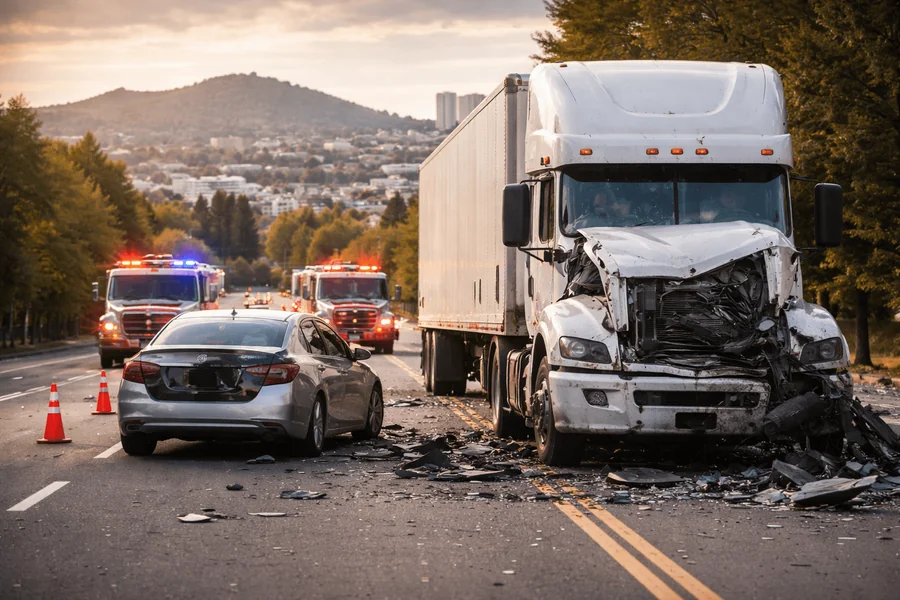
Truck crash victims in Washington, DC, can suffer severe injuries and expensive expenditures. More than one party or company is often involved in these accidents. The truck driver may be at fault for the incident, but others may be at fault, too. Knowing all the liable parties can be a significant aspect of an injury lawsuit. It can assist victims get the right amount of compensation for medical treatment, lost earnings, and other damages. So where do victims begin? And knowing who the players are is the first step in holding the correct parties accountable.
Why Might More Than One Party Be Responsible?
There might be a lot of people and companies involved in a truck accident. A driver may make a bad decision behind the wheel. Also, a trucking company may neglect to properly maintain their vehicles. For example, faulty brakes may lead a truck to collide with other vehicles. Maybe the driver was unaware that an issue existed. But it may be the company that services the trucks. A repair shop, parts supplier, or shipper may also share some of the blame. You need to look at the facts in every case. Victims need to look past the motorist that caused the collision.
Who Is Responsible for a Truck Accident?
There may be more than one party responsible for a truck accident. Here are some things victims should remember:
1. Truck Driver
An accident can result from the irresponsible decisions of the truck driver. For example:
- Distracted/tired driving.
- Driving too closely or too fast.
- Driving impaired (drugs or alcohol).
- Ignoring traffic signs/signals.
- Not checking blind spots.
- Driving is not well rested.
Report and video can be the evidence of what transpired.
2. Trucking company.
A trucking firm may be liable for the activities of its driver. It may also be at fault for its own safety violations. For example, a firm may hire a dangerous driver or ignore past driving difficulties. It might pressure drivers into meeting deadlines when the drivers are overly weary. These concerns can be revealed by examining driver records, policies, and work schedules.
3. Owner of the Truck.
The truck driver might not be the owner (person or company) of the truck. This is important since some trucks are rented or leased. If negligence resulted in an unsafe automobile, the owner could be liable. Broken lights, bald tires, and brake problems can cause serious accidents.
4. Companies Specializing in Truck Repairs and Maintenance
Trucks need frequent inspections and maintenance. If a repair shop makes a truck dangerous with reckless repairs, it is liable. For example, a mechanic could overlook worn brakes. That error might lead to a driver losing control in busy DC streets. Evidence might be repair bills or maintenance logs to demonstrate if the shop did its job or not.
5. Vehicles loading companies
Poorly loaded goods might cause the vehicle to become uncontrollable. When making quick curves or stopping suddenly, heavy cargo might also slide. Even loose cargo could tumble into other cars. Federal cargo standards mandate careful placing and securement of loads. Drivers and carriers are liable under these regulations. A negligent loading business can be held liable if they caused the crash.
6. Truck or Parts Manufacturer
Sometimes a bad part in a truck causes a bad crash. A malfunctioning brake or tire or steering component may give way without warning. You may have a product liability claim against the manufacturer of the part. They may need to hire an expert to examine the damaged part and determine the cause of its failure.
How do the victims find out who was at fault?
A police report does not contain all of the fault parties. Victims also need something tangible tying each party back to the accident. A thorough investigation can include:
- Police reports: These may provide information of the crash, witness identities, and first findings.
- Truck files: These can show dangerous driving time in driver logs and job schedules.
- Maintenance records: May reveal missing inspections, incomplete fixes.
- Black box data: Some trucks collect data about driving, like speed and braking.
- Camera footage: Traffic cameras or adjacent businesses may have recorded the crash.
- Cargo records: Shipping documents may help show who loaded and secured the cargo.
- Witness statements: What others who were at the crash scene may have to say about it.
As soon as possible. Some records can get lost, deleted, or altered during the passage of time. An attorney can obtain a formal VFR to save any important records from being lost.
DC law matters.
But there are regulations in DC injury cases (and laws) that may limit a victim’s ability to obtain money. One important rule is the contributory negligence rule. Under the common law in DC, if Keene commits his or her injury and his or her own carelessness, then there will be no recovery. But there’s a statutory exception for pedestrians and other vulnerable road users written in DC Code § 50-2204.52. This law may apply to truck accidents with bicyclists and pedestrians. Each claim will have to be examined carefully in light of the facts and the law. Victims should also maintain records of medical costs, missed wages, and future care requirements. Such records are useful in proving the impact of the catastrophe on their lives.
How Might a DC Truck Accident Lawyer Work for Me?
Without legal advice, you might not be able to identify all the liable parties. Trucking businesses and their insurers usually have teams working to protect their interests. A DC Truck Accident Lawyer can investigate the accident, collect data, and locate viable claims. They may also interview witnesses and consult with accident specialists. Price Benowitz Accident Injury Lawyers, LLP, situated in Washington, DC, specializes in truck accidents and other motor vehicle injuries. The firm also handles serious traumas, including spinal injuries and burns. A lawyer can also negotiate with insurance companies to get compensation for medical expenses, lost wages, pain and suffering, and other damages. Offering these helps victims to focus on their health and family.
Frequently Asked Questions (FAQs)
1. Could More Than One Person Be Responsible for a Truck Accident in Washington, DC?
Short answer: Yes. A truck crash can have multiple at-fault parties.
Detailed answer: A claim could be brought against the truck driver, the truck owner, the trucking company, the repair shop, or the cargo loader. A defective portion of the truck also plays a role, as well. An investigation will help determine what each party did and the liability of each party.
2. Failing to Maintain Safe Equipment: Is a Trucking Company Responsible for Its Driver?
Short answer: Yes A trucking firm may be held accountable for the negligent acts of its employee.
Detailed answer: The employer may also be liable for bad hiring, harmful work regulations, or bad truck maintenance. Evidence to back up claims includes safety reports, job records, and driver files.
3. What kind of evidence can be used to determine responsible parties?
Short answer: Police reports, pictures, and witness testimony on truck logs can assist.
Detailed answer: Trucking logs, repair records, cargo documents, and truck data might also be helpful evidence. Video evidence will also aid in explaining how the accident took place. This evidence can be gathered and preserved with the help of an attorney.
4. Is a Cargo Loading Company Liable in a Truck Crash?
Short answer: Yes. Dangerous truck accidents can result from poorly loaded goods.
Detailed answer: Loose or unequal cargo, in particular, might shift as the truck is moving. Fires can roll or cause loss of control of the truck. If the accident was caused by improper loading, you may have a claim against the entity responsible.
5. When Do I Need a DC Truck Accident Lawyer?
Short Answer: Get a lawyer as soon as you take care of yourself.
Detailed answer: Legal help early may preserve important documents and witness testimony. An attorney will also be able to explore insurance difficulties and find every potential defendant. Your prompt action will ensure the entitlement to sufficient compensation.