
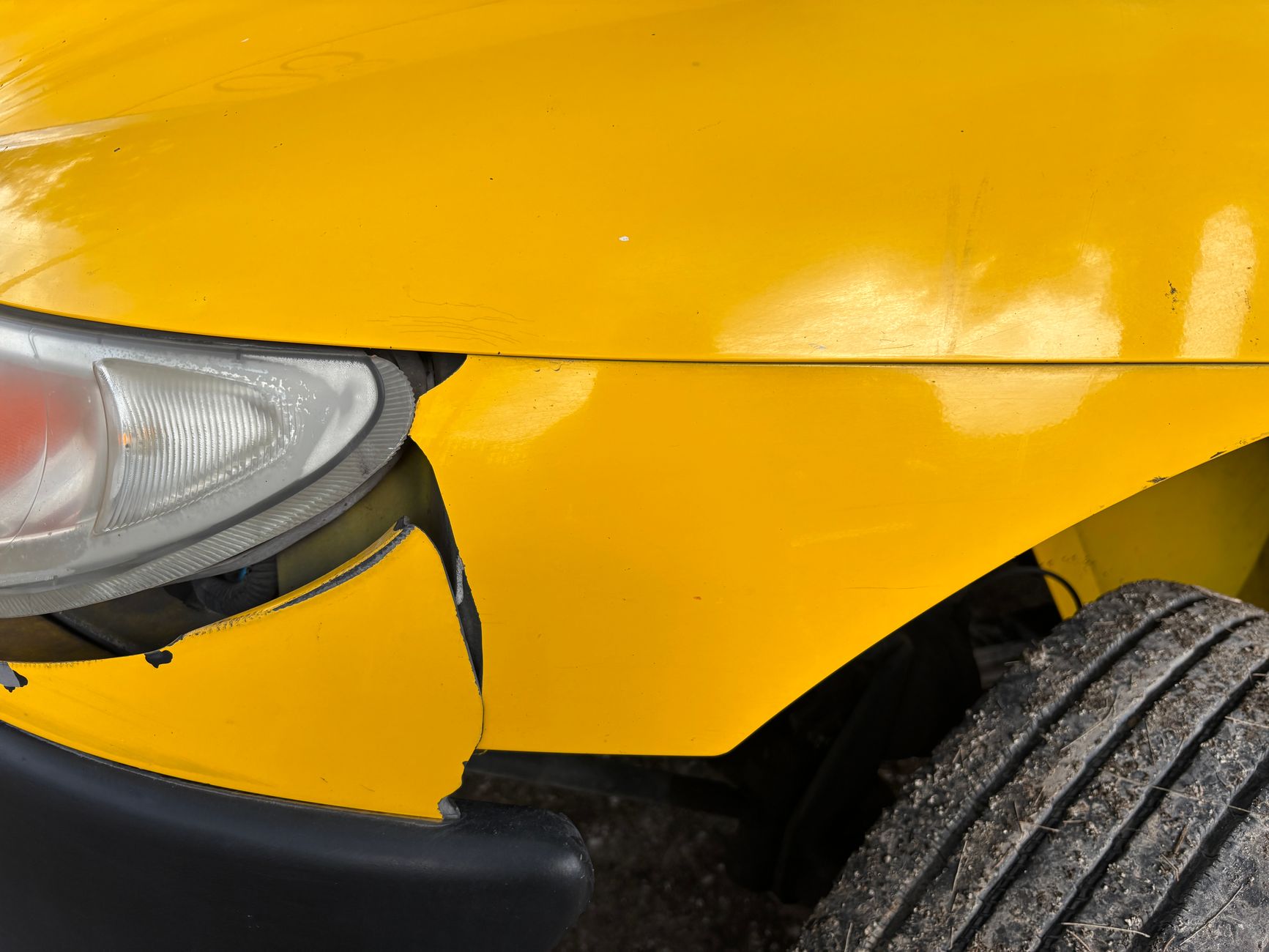
A single minor dent typically costs $75 to $150 to fix through paintless dent repair, compared to $150 to $600 or more through conventional body shop repair involving fillers and repainting. That's a significant gap, and it's driven by one core difference in how the two methods actually work.
The Cost
The price gap isn't arbitrary. It comes down to labor time, materials, and whether paint matching is involved at all.
Paintless dent repair (PDR) uses specialized tools to gently massage a dent back into shape from behind the panel, without cutting, filling, or repainting. Because there's no paint work involved, there's no drying time, no paint-matching risk, and dramatically less labor overall.
Conventional repair typically involves sanding down the damaged area, applying body filler, primer, paint, and clear coat, then color-matching and blending the new paint into the surrounding panel. Each of those steps adds both material cost and labor hours.
Why the Difference Is So Significant
The paint step alone explains most of the cost gap. Professional paint matching requires mixing to match your vehicle's exact factory color, which can vary even within the same model year due to production batch differences. Add in the labor time for sanding, filling, priming, multiple paint coats, and clear coat application, and it's easy to see how a repair balloons well past what PDR charges for the same size dent.
When Paintless Dent Repair Actually Works
PDR isn't the right fix for every kind of damage. It works best under specific conditions:
- The paint surface isn't cracked, chipped, or broken
- The dent isn't located too close to a panel's edge
- The metal hasn't been stretched significantly (common in more forceful impacts)
- The panel is accessible from behind, which isn't always the case depending on vehicle design
A paintless dent repair Greeley Colorado technician can typically assess in a few minutes whether a specific dent is a good PDR candidate just by looking at the paint condition and dent depth.
When You Actually Need Conventional Repair
If the paint is cracked or chipped at the dent site, if the metal has stretched from a harder impact, or if the damage is located somewhere the repair tools can't reach from behind the panel, conventional repair becomes the only real option. Trying to force a PDR fix on damage that needs traditional repair usually doesn't hold up well over time.
How Insurance Claims Factor Into the Decision
If your dent resulted from an insurable event, hail damage is the most common example, the cost comparison above matters slightly differently than if you're paying entirely out of pocket. Many insurance policies will cover either repair method, but the practical math still favors PDR in most cases, since a lower repair cost means you're less likely to bump into your deductible unnecessarily, and insurers themselves frequently prefer PDR for exactly this reason when the damage qualifies.
Hail damage specifically is often an excellent PDR candidate, since hail typically creates shallow, rounded dents without cracking paint, which is exactly the damage profile PDR handles best. It's common after a significant hailstorm for repair shops to see a surge in vehicles that are almost entirely treatable through paintless methods, which is part of why PDR-focused shops often see seasonal demand spikes tied to weather events.
What About Multiple Dents on the Same Vehicle?
Hail damage and minor parking lot dings often mean dealing with several dents at once rather than just one, and the math shifts a bit at volume. Most PDR shops offer per-vehicle or per-panel pricing for multiple dents rather than simply multiplying a single-dent price by the total count, since there's efficiency in treating several dents on the same panel or vehicle in one session. If you're facing multiple dents, it's worth asking specifically about volume pricing rather than assuming the per-dent number quoted for a single repair scales up linearly.
The Timeline Difference Matters Too
Cost isn't the only practical difference between these two methods, turnaround time diverges significantly as well. A straightforward PDR repair on a single dent can often be completed in a matter of hours, sometimes while you wait, since there's no paint drying or curing time involved anywhere in the process. Conventional repair, by contrast, typically requires the vehicle to stay at the shop for several days at minimum, factoring in filler curing time, multiple paint coats, and clear coat curing before the vehicle can be safely handled and driven.
For anyone relying on their vehicle daily, this timeline gap is often just as significant a factor as the cost difference. A dent that qualifies for PDR can frequently be resolved and off your calendar within a single day, while the same visual outcome through conventional repair might mean arranging alternate transportation for the better part of a week.
Does PDR Affect Resale Value?
This is worth knowing: PDR, done correctly, typically preserves your vehicle's original factory paint, which is actually a point in its favor for resale and trade-in value. Conventional repairs, even done well, involve a repaint that a trained eye, or a vehicle history report noting paint work, can sometimes flag. Experts note that original factory paint is generally viewed more favorably than repainted panels when assessing a vehicle's condition.
Key Takeaways
- PDR typically runs $75 to $150 per dent; conventional repair typically runs $150 to $600 or more for comparable damage.
- The cost gap comes primarily from paint materials and labor, which PDR eliminates.
- PDR only works when paint is intact and metal isn't significantly stretched.
- Preserving original factory paint through PDR can be a modest advantage for resale value compared to a repainted panel.
For minor dents where the paint is still intact, paintless dent repair is almost always the faster, cheaper, and value-preserving option. The catch is simply that not every dent qualifies, which is why a quick assessment before committing to either method is worth the few minutes it takes.
A Quick Self-Check Before You Call Anyone
Before scheduling any repair, it's worth doing a basic visual check yourself to get a rough sense of which category your damage likely falls into. Run your hand gently over the dent, if the paint feels smooth and unbroken with no rough edges or flaking, that's a good early sign for PDR eligibility. Look closely at the center and edges of the dent under good lighting for any hairline cracks in the clear coat, which aren't always obvious at a glance but rule out PDR if present. And consider how the dent occurred: a shopping cart ding, a hailstone impact, or a low-speed door ding typically produces the kind of shallow, contained damage PDR handles well, while a collision involving another vehicle often produces sharper creases or stretched metal that push the repair into conventional territory.
None of this replaces an actual professional assessment, but it can help you walk into that first conversation with a reasonable expectation of which cost range you're likely looking at, rather than being caught off guard either way.