
Reformer Pilates uses a sliding carriage, springs, straps, and adjustable resistance to guide controlled movement. The setup looks simple at first glance. A well-equipped pilates studio provides the space and professional guidance needed to perform these movements safely and effectively. The experience changes once the body starts working against spring tension at different angles.
Each movement is structured around control. Speed is reduced on purpose. Breathing patterns are used to support stability. The goal is not repetition for its own sake, but precision in how muscles activate and release.
A typical beginner session often includes lying, kneeling, and seated positions. Even basic movements feel unfamiliar at first because balance shifts constantly on the moving carriage. The instability forces attention into posture and alignment.
Why Strength Feels Different in Reformer Training
Strength development in Reformer Pilates does not resemble traditional gym lifting. There are no heavy dumbbells or barbell loads. Instead, resistance comes from springs that can be adjusted for intensity.
The feeling during exercise is often mixed. One muscle group works while another stabilises. For example, during a leg press movement, the core and hips also engage to control the carriage return. That dual activation creates fatigue in areas that are often underused in daily life.
People who spend long hours sitting at desks often notice weakness in the hips, glutes, and lower core. Reformer training exposes these gaps early. Movements feel harder than expected because stabiliser muscles are doing more work than surface muscles.
Over time, strength improves in a more balanced way. Instead of isolated muscle growth, coordination across muscle groups becomes more efficient.
Flexibility Develops Through Controlled Movement
Flexibility in Reformer Pilates does not come from forcing deep stretches. The machine guides joints through a full range of motion while resistance is applied. This reduces the risk of overstretching while still improving mobility.
Tight areas like hamstrings, hip flexors, the lower back, and shoulders gradually loosen through repetition. The improvement is often subtle at first. It shows up during daily movement rather than inside the studio.
For example, bending to pick something up or standing up from a chair may feel smoother after several weeks of consistent training. That change usually happens without conscious awareness.
Unlike static stretching routines, Reformer Pilates combines stretch and strength in the same movement. This combination helps the body maintain flexibility under load, not just in relaxed positions.
Why a Studio Environment Shapes Results
Studio setup plays a larger role than many people expect. Equipment spacing, class size, and instructor attention directly affect movement quality.
Smaller class sizes usually allow instructors to correct posture more often. Small adjustments matter. A slight shift in foot placement or pelvic alignment can change which muscles activate during a movement.
In larger classes, form corrections tend to happen less frequently. That can lead to compensation patterns, where stronger muscles take over, and weaker areas remain undertrained.
The condition of the equipment also matters. Springs lose tension over time. Foot straps and carriage smoothness affect resistance consistency. A well-maintained studio tends to produce more predictable training results.
Who Benefits Most From Reformer Pilates?
People with sedentary work routines often respond well to Reformer Pilates. Long sitting hours reduce hip mobility and weaken core stabilisation. The controlled resistance helps rebuild these areas without high joint stress.
Some individuals use it alongside other training methods. Runners, dancers, and athletes often include Reformer sessions to improve balance and injury prevention. The focus on controlled movement supports joint stability under dynamic conditions.
People dealing with mild posture issues or recurring back stiffness also tend to find value in the training. The emphasis on alignment helps reinforce more neutral spinal positioning during movement.
Results depend heavily on consistency. Irregular attendance limits progress, especially in mobility and coordination improvements.
Common Misconceptions About Difficulty
Reformer Pilates is sometimes assumed to be easy because it does not involve heavy lifting or fast movement. That assumption usually changes after the first few sessions.
Fatigue appears in unexpected places. Inner thighs, deep abdominal muscles, and stabilising muscles around the shoulders often become tired quickly. These areas are not commonly targeted in everyday movement or standard gym routines.
The challenge comes from control rather than intensity. Maintaining slow, precise movement under resistance requires sustained focus. Losing form even slightly changes which muscles carry the load.
Beginners often underestimate how demanding slow repetition can feel. The absence of momentum forces muscles to stay engaged for longer periods.
Progress Over Time
Early sessions usually focus on learning equipment handling and basic movement patterns. The carriage, springs, and straps take time to get used to.
After several sessions, small changes begin to appear. Standing posture may feel more stable. Sitting for long periods may feel less tiring. Lower back stiffness after work hours often reduces slightly.
Further progress shows up in smoother transitions between movements. Balance improves during single-leg exercises. Core engagement becomes more automatic rather than forced.
Advanced stages involve greater control under higher resistance settings. Movements become more fluid, with less visible effort required for stability.
Progress is gradual rather than sudden. It builds through repetition and familiarity with movement patterns.
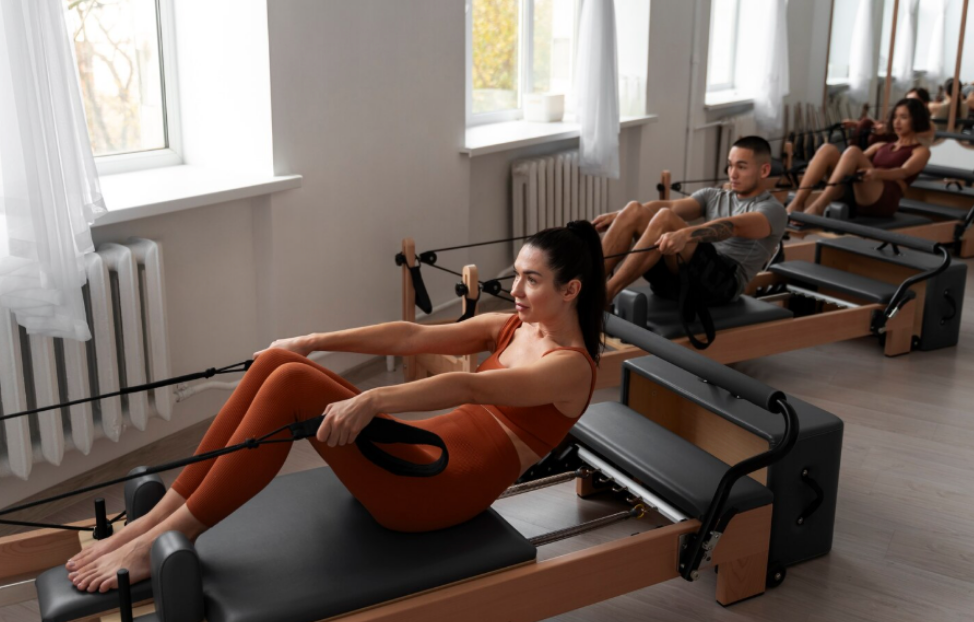
Choosing a Reformer Pilates Studio
Studio selection affects both safety and results. Instructor experience plays a major role, especially for beginners who rely on correction for proper alignment.
Class size is another factor. Smaller groups usually allow more attention per participant. That improves movement accuracy and reduces the chance of developing poor form habits.
Equipment condition should not be ignored. Springs, straps, and carriage systems must function smoothly for resistance to remain consistent. Worn equipment changes how exercises feel and can affect progression.
Trial sessions often help identify whether the teaching style suits individual learning speed. Some instructors focus heavily on correction, while others allow more independent movement flow.
Consistency and Long-Term Change
Reformer Pilates does not rely on intensity for results. It relies on repetition and control over time. Missing sessions slows progress in mobility and coordination more than strength alone.
Changes often appear outside the studio first. Walking posture, sitting comfort, and daily movement patterns shift gradually. These changes are subtle and build over weeks rather than days.
Strength and flexibility improve together rather than separately. The combination creates more stable movement patterns in everyday activities.
The training effect is cumulative. Each session builds on previous control, even when progress feels slow.