
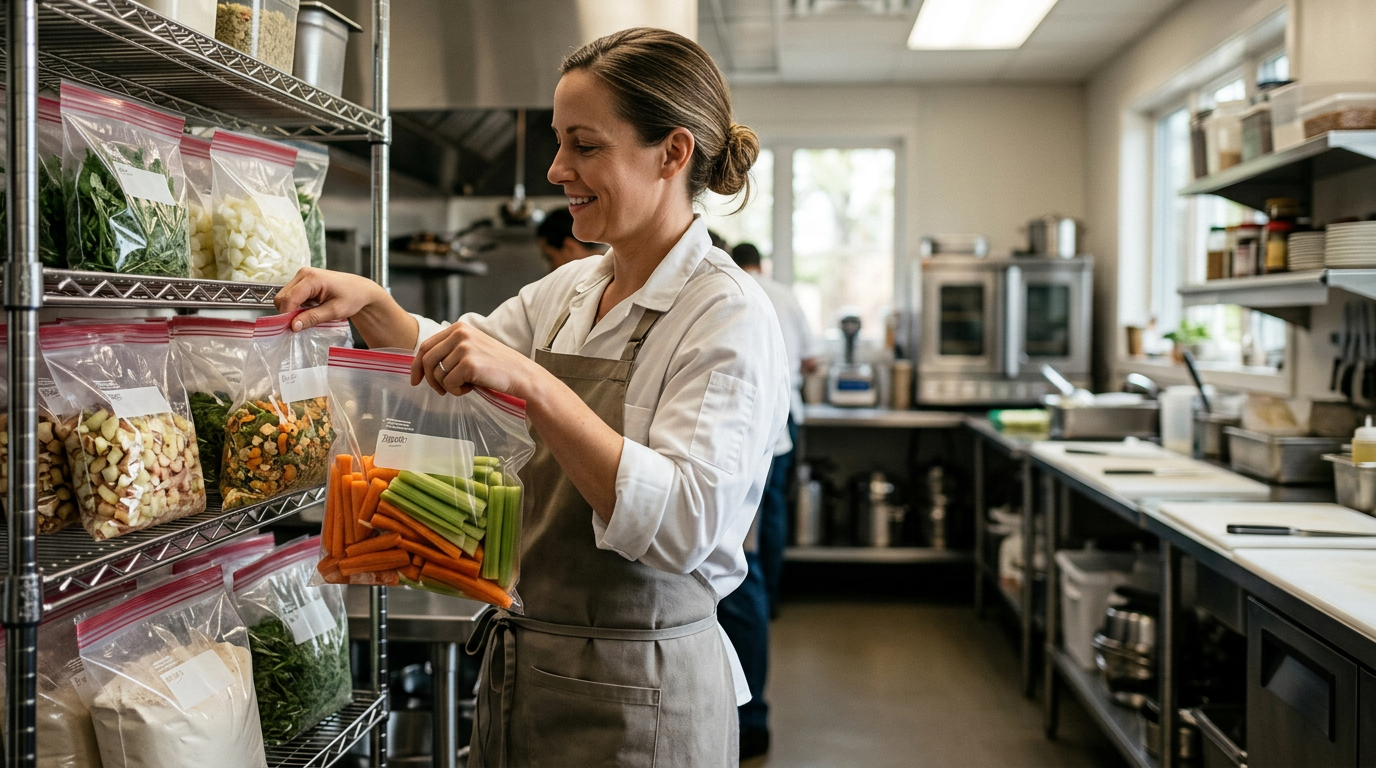
Packing lunch often happens while several other things are competing for attention. Someone is looking for a water bottle, breakfast is still on the counter and the clock is moving faster than expected. A useful lunch-packing routine does not need a perfectly organized kitchen. It needs a few familiar choices: food you know you have, packaging that suits it and a place where the things you need are easy to find.
Plan Around the Lunches You Actually Eat
Start with a few lunches that fit your household rather than a complicated menu nobody wants to follow. Think about the sandwich, snack or piece of fruit people regularly choose, and check the kitchen before making a shopping list. Knowing what is already open gives it a place in the plan. This is also a chance to notice what keeps coming home uneaten. A portion that looks right on Sunday evening may not match someone’s appetite on a busy school or work day.
Give Packing Supplies a Place
Keep lunch containers, suitable bags and the other supplies you reach for in the same cupboard or drawer. That way, packing does not begin with a search through three different places. A small basket can keep loose supplies together without requiring a complete kitchen makeover. Leave the items you use most often within easy reach and move occasional-use supplies out of the way. The arrangement should be simple enough for anyone in the household to follow.
For suitable snack portions, resealable snack bags offer a way to keep individual items together in a lunch bag. Match the package to the food: a rigid container may be a better choice for something easily crushed, while a sandwich needs enough room to close without squashing it. Check the product’s intended uses rather than assuming a resealable closure makes every bag suitable for liquids, heating or freezing. Packaging should fit the lunch you are making, not dictate it.
Make Portions Easy to See
A loose collection of half-open packages can make it hard to tell what is available. Give lunch ingredients a visible place and use simple labels when the contents are not obvious. If several people pack their own food, agree on a spot for the items intended for lunches. You do not need matching containers or elaborate labels; you need to be able to find the crackers before opening another box.
Portion sizes are worth adjusting as you go. If a snack is often left unfinished, try packing a little less rather than repeating the same amount out of habit. If it is never enough, change the portion or add something else. A bag or container is simply a way to pack that decision. It cannot tell you what someone will eat, but a consistent routine makes the pattern easier to notice.
Leave the Kitchen Ready for Tomorrow
At the end of the day, return clean lunch equipment to its usual place and check whether anything needs replacing. Follow the care and use instructions for the packaging you choose; a resealable closure does not by itself mean a bag is intended for repeated use. If you choose a certified compostable option, check the exact product’s disposal instructions and whether your local program accepts it. Do not assume the school or workplace has the same collection arrangements as home.
The most useful routine is the one that takes a little pressure off tomorrow morning. Keep the lunches familiar, the supplies easy to reach and the portions open to adjustment. Some days will still be hurried, and there is no need to make lunch packing another standard of perfection. A few practical choices can give the task a clear beginning and end, leaving less to search for when it is time to head out.