
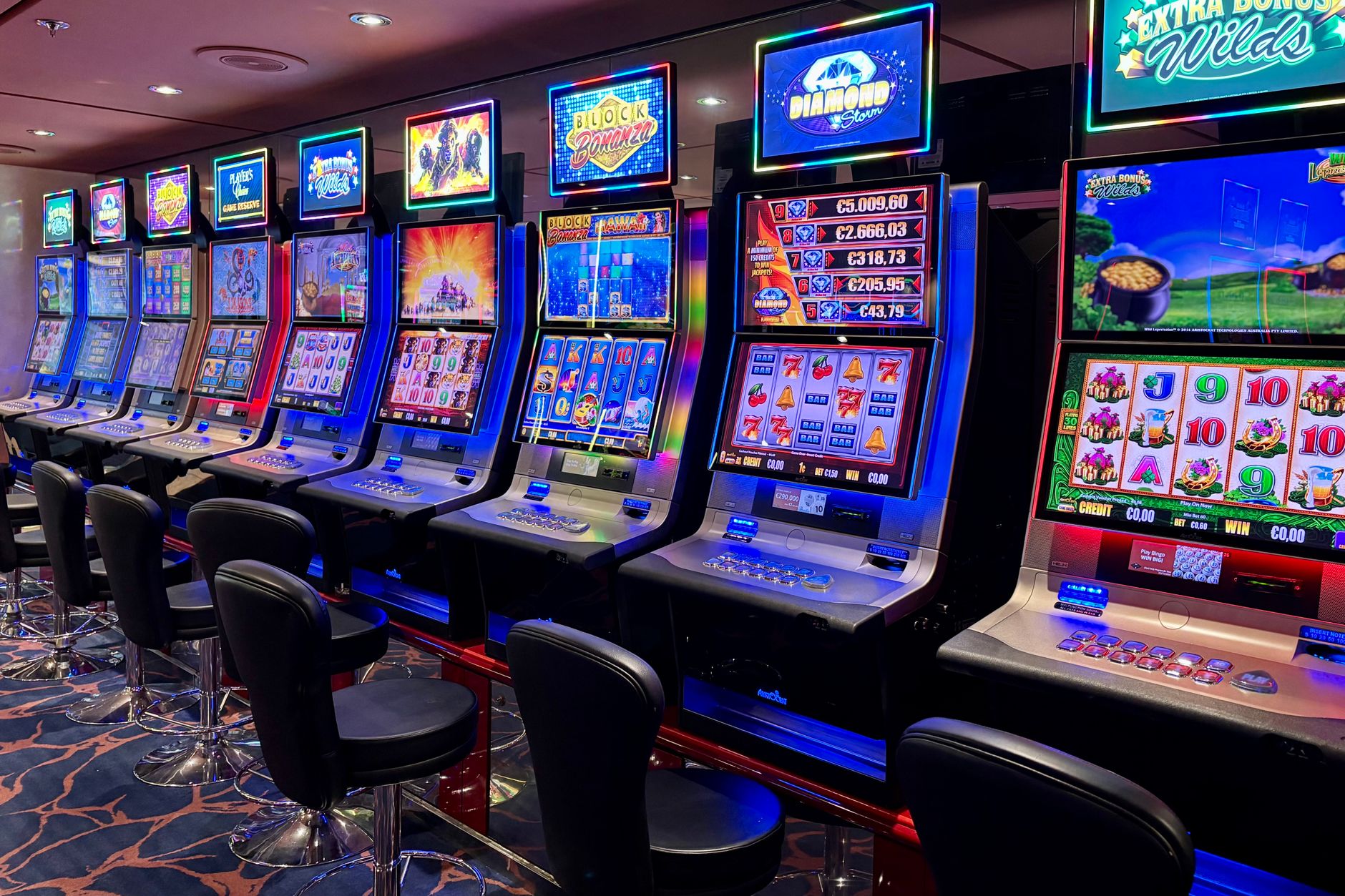
You open an online casino app on a Tuesday afternoon and see a jackpot counter sitting at £14 million — and it’s still climbing. That number didn’t come from nowhere. It’s the end product of roughly 130 years of mechanical tinkering, regulatory wrestling and digital reinvention that most players never think about while they’re spinning.
By connecting players directly to top-tier progressive networks, premier digital platforms like Nine Win UK offer real-time access to multi-million-dollar prize pools that grow continuously across a global player base. Here’s the counterintuitive part: the biggest jackpots in history weren’t built by casinos getting greedier. They were built by casinos getting smarter about pooling. The shift from a single machine paying out a fixed prize to a networked system aggregating bets across hundreds of platforms is the actual engine behind every record-breaking number you’re seeing right now in 2026. It’s not luck scaling up. It’s architecture scaling up.
Where It All Started and Why It Mattered
The Liberty Bell — Charles Fey’s 1890s mechanical slot — could only pay what its physical coin tray held. That was the ceiling. A hard, dumb, iron ceiling determined entirely by how many coins fit inside a metal box bolted to a bar counter. Jackpots in that era topped out at a few dollars. Nobody was retiring off a Liberty Bell payout.
The 1970s and 1980s changed the fundamental logic. Electronic components replaced mechanical reels, and suddenly the machine didn’t need to hold the prize money physically inside itself. Prize pools could be calculated, stored and networked. That was the first real crack in the ceiling. Casinos started connecting machines across a single floor, then across multiple floors, then — and this is where it gets genuinely interesting — across entirely separate venues. A bet placed in one casino began feeding a jackpot that a player in a different city might win. The pool concept was born, and it was immediately obvious that bigger pools meant bigger numbers.
By the 1990s and into the 2000s, digital systems formalized what the 1980s had experimented with. Multi-casino progressive networks became standard infrastructure rather than novelty. The jackpot transformation here was less about the games themselves and more about the pipes connecting them — the software layers that let a single progressive pool aggregate contributions from dozens of venues simultaneously. A jackpot that once maxed out at thousands could now realistically climb into the millions simply because the contributor base had expanded by an order of magnitude.
The Numbers Behind the Jump From 2010 to Now
From 2010 onward, three things collided at roughly the same time and the results were, frankly, kind of absurd in the best possible way. Mobile integration meant players could contribute to progressive pools from their phones — not just from physical casino floors. Cryptocurrency acceptance removed friction from cross-border contributions, meaning a pool could draw from players in jurisdictions that had previously been excluded. And AI-optimized game algorithms started doing something that no mechanical slot could ever do: determining optimal payout timing based on real-time data analytics rather than fixed probability tables baked into hardware.
That last one deserves a second. The old system was static — a machine’s odds were set at manufacture. The new system is dynamic. Algorithms monitor pool size, player behavior and cross-platform contribution rates, then adjust in real time. This doesn’t mean jackpots are “rigged” in the sinister sense. It means they’re managed with a precision that the 1890s version of this industry couldn’t have imagined in a fever dream.
Platforms like Nine Win operate within this exact framework — progressive jackpot pools that pull contributions from across their entire player base rather than isolating prizes to individual game sessions. That’s the modern payout structure in practice.
The evolution of slot machines across these decades can be summarized by what changed at each turning point:
- 1890s–1960s — mechanical machines with fixed, physical payout limits determined by coin tray capacity
- 1970s–1980s — electronic components enabled networked prize pools across multiple machines and then multiple venues
- 1990s–2000s — digital infrastructure connected entire casino networks, allowing progressive pools to accumulate at scale
- 2010–2026 — mobile access, crypto integration and AI-driven algorithms pushed jackpot growth into exponential territory
What Actually Powers a Record Jackpot in 2026
The specific innovations between 2015 and 2026 that pushed jackpots to their current record highs aren’t just technical — they’re also regulatory. Gaming regulation evolution across major markets allowed cross-platform aggregation that would have been legally impossible a decade earlier. When regulators in multiple jurisdictions started licensing cross-border progressive networks, the contributor pool for a single jackpot could theoretically expand to millions of players simultaneously. That’s not an exaggeration. It’s the math of networked contribution at global scale.
The economic factors matter too. As player volume on digital platforms grew consistently from 2010 onward, the baseline contribution rate to progressive pools grew with it. More players spinning means faster jackpot accumulation means higher peak values when a payout eventually triggers. The record highs of 2026 aren’t a spike — they’re the predictable outcome of a system that’s been compounding for over a decade.
Here’s a comparison of jackpot characteristics across the key eras:
| Era | Jackpot Type | Typical Peak Value | What Actually Limited It |
| 1890s–1960s | Fixed mechanical payout | A few dollars — embarrassingly small by today’s standards | Physical coin tray capacity. That’s it. |
| 1970s–1980s | Electronic progressive | Thousands, occasionally tens of thousands | Network size — usually a single venue floor |
| 1990s–2000s | Multi-casino progressive | Hundreds of thousands to low millions | Jurisdictional licensing restrictions |
| 2010–2026 | Cross-platform AI-managed progressive | Tens of millions — and climbing | Honestly? Not much anymore |
The regulatory and economic factors that evolved alongside the technical capabilities are what most gaming history coverage skips. It’s easy to credit a software update. It’s harder to explain how a regulatory framework in one market unlocking cross-border pooling quietly added millions of eligible contributors to jackpots overnight. Sites including Nine Win benefited directly from these regulatory shifts — broader licensing meant broader pool participation, which meant larger prizes accumulating faster.
Modern progressive jackpot mechanics depend on a few interlocking components that all have to work together:
- Real-time contribution aggregation across every active player session on the network
- AI-driven payout timing algorithms that monitor pool thresholds and player activity simultaneously
- Cross-platform licensing that legally permits a single jackpot to span multiple casino brands and jurisdictions
- Cryptocurrency rails that allow contributions from markets where traditional payment friction previously excluded players
Why the Record Highs Right Now Are Not a Coincidence
The current jackpot records aren’t a happy accident or a particularly lucky month. They’re the compound result of every single innovation layer described above activating simultaneously at scale — mechanical to electronic to digital to AI-managed, with regulatory unlocks happening at each transition point. Nine Win and platforms built on similar infrastructure are positioned to keep feeding these pools as player volume continues its upward trajectory.
From the Liberty Bell’s coin tray in the 1890s to AI-managed cross-platform progressive networks in 2026: the jackpot didn’t just get bigger. The entire definition of what a jackpot even is got rebuilt from scratch, three times over.